Showing posts with label ross lockhart. Show all posts

Saturday, August 23, 2014

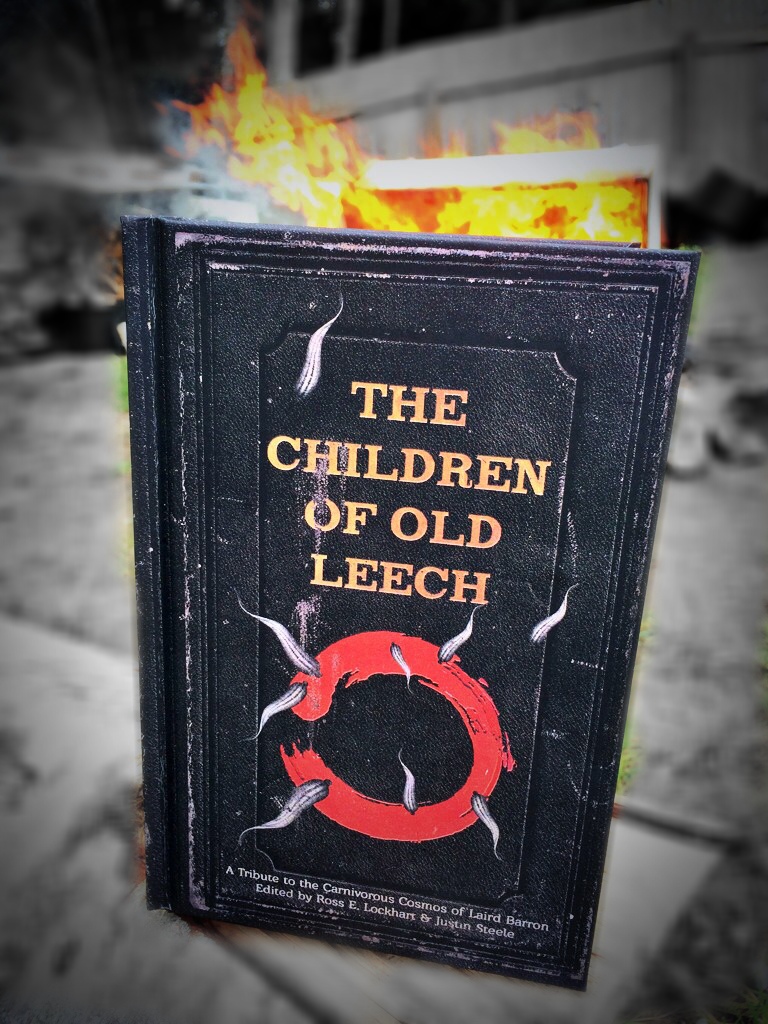
Giveaway: The Children of Old Leech edited by Ross E. Lockhart and Justin Steele


It's been a busy end to the summer, and I've allowed myself to accumulate quite a pile of books for giveaway.  I will start with a hardcover copy of The Children of Old Leech, signed by myself and co-editor Ross E. Lockhart. Elsewhere on the blog you can find excerpts from every story, and my introduction and Ross's afterword in full. Rules below.

Entering is easy. Send an e-mail to contest(at)arkhamdigest.com with the subject line OLD LEECH. In the body of the e-mail include your snail mail address and why you want to read the book. Also let me know if you prefer me to simply sign it, or to personalize/inscribe it for you. I will do a random drawing Thursday, August 28th. This contest is only open to residents of the US and Canada, due to shipping costs. 

Friday, August 15, 2014

The Children of Old Leech: Afterword by Ross E. Lockhart


Today brings the final installment in our series of excerpts from The Children of Old Leech. We hope you’ve enjoyed these excerpts as much as we’ve enjoyed bringing them to you, and we sincerely hope that we’ve persuaded you to pick up a copy of The Children of Old Leech for yourself. And while this round is over, we will be back with more samples of Word Horde books, photos, reviews, and previews, so we would encourage you to stay tuned. So with the melancholic sense of a journey’s impending conclusion, but no regrets, we bring you a look behind the curtain with co-editor/publisher Ross E. Lockhart’s “Afterword.”


One of my first gigs in this crazy business we call publishing was writing the flap copy for the hardcover edition of Laird Barron’s first collection, The Imago Sequence. As I recall, I got paid in books for this, which is fine because I’d likely have spent any monetary compensation on books anyhow.

The Imago Sequence blew me away. I was already fairly well versed in the weird tale, and in the typical tropes associated with Lovecraftian pastiche, but Barron’s approach did something unexpected with the form, fusing the strangeness of supernatural horror with the stark naturalism of Jack London (whose “To Build a Fire” Barron himself classifies as Cosmic Horror), daring to deliver something different, a high-stakes carnivorous cosmos populated with tough, rugged protagonists more accustomed to inhabiting hard-boiled tales of crime or espionage than Lovecraft’s prone-to-fainting academics. Through this (at the time) unlikely combination, Barron managed to, in the words Ezra Pound once pinched from a Chinese emperor’s bathtub, “make it new.”

One does not read a Laird Barron story so much as one experiences it in a visceral manner. A tale like “Shiva, Open Your Eye” strips away a reader’s reason, flaying him, leaving him floating in the primordial jelly, innocent of coherent thought. “Hallucigenia” is, quite literally, a kick in the head. The painstaking noirish layering to be found in “The Imago Sequence” culminates in a ghastly, shuddering reveal of staggering proportions. And it is that sense of culmination one finds echoing throughout Laird Barron’s work, binding the whole together into a Pacific Northwest Mythos reminiscent of, but cut from another cloth entirely from, Lovecraft’s witch-haunted New England.

A handful of one-off copywriting gigs led to greater opportunities, and soon, I found myself working full-time for the publisher of The Imago Sequence, which led to my meeting Laird in the flesh at the World Fantasy Convention in Saratoga, NY. I found we shared a kindred spirit… and a taste for rare spirits and supernatural tales. Upon my return, I worked on the trade paperback edition of The Imago Sequence, and on Laird’s next collection, Occultation, where I not only wrote the jacket copy, but laid out the book, coordinated the production team working on it, supervised copyedits, approved those edits with Laird, and corrected the book (as a nod to Robert Bloch, I suppose you could refer to me as “The Man Who Corrected Laird Barron.”).

Shortly after Occultation landed, my wife and I embarked on a road trip up the West Coast, a drive where the scenery—stark mountains, tall trees, steep costal drop-offs—constantly reminded me of one Laird Barron story or another. Our journey brought us to Olympia, where we met Laird for lunch, talked martial arts and American literature, and I snapped a few photographs of Laird playing with our little dog, Maddie.

Somewhere along the line, both The Imago Sequence and Occultation managed to win Laird his first and second Shirley Jackson Awards, and I began working with Laird as editor of his first novel, The Croning, which he sent to me in bits and pieces over the course of a tough year, building it like a wall, brick by brick and layer by layer. With The Croning, Laird metaphorically opened a vein and bled words onto the page, and while a casual reader might not spot the author’s open wounds, the emotional wallop delivered by the book more than assures you that those wounds are not only there, but that they are raw.

I published Laird’s novella “The Men from Porlock” in my first anthology, The Book of Cthulhu, and his “Hand of Glory” in my second, The Book of Cthulhu II. And over the course of 2012, I worked on Laird’s third collection, The Beautiful Thing that Awaits Us All, reading stories as Laird finished them and sent them along. One of my favorites in the collection, the wickedly sardonic “More Dark,” managed to get me in trouble when I read it on my phone during a baseball game, prompting my wife to elbow me as I laughed—then shivered—at a situation that rode the train from bad to weird to worse to a downright Barronic level of darkness. The Beautiful Thing that Awaits Us All was the final project I worked on for its publisher, which might bring us full circle, were it not for the fact that this circle, like the sigil marking Moderor de Caliginis, is an open—and hungry—curve.

In 2013, I started my own publishing company, Word Horde, launching the press with Tales of Jack the Ripper, an anthology that included Laird Barron’s tour-de-force “Termination Dust,” a fractured narrative not only providing the thrills and chills expected from Barron’s oeuvre, but marking a new venue for his brand of cosmicism, a strange, savage, and sanguine land that Laird knows quite well… Alaska.

Not long after the publication of Tales of Jack the Ripper, Justin Steele, who had reviewed The Book(s) of Cthulhu and Tales of Jack the Ripper at his weird fiction website, The Arkham Digest, approached me suggesting this anthology. I receive—and say no to—a lot of anthology pitches, many of which are suggested as possible co-editorial projects, but I found the idea of honoring Laird, an author whose work has influenced and intersected with much of my professional career, irresistible. I approached Laird, asking for permission to let other authors play in his sandbox, and to my delight, Laird said yes. For that, Justin and I owe Laird a lifetime of gratitude. We immediately set to building a roster of our favorite authors, authors who we felt shared Laird’s vision of a ravenous universe, and an understanding of that terrible, beautiful thing that awaits us all.

There are no accidents ’round here. The editors of, and the authors included in, this volume have been inspired and affected by Laird Barron’s carnivorous cosmos. We’ve all gazed at mysterious holes, wondering where they lead. We’ve all found ourselves in conversation with a stranger, staring at a scar and wondering if it is, instead, a seam. We’ve all heard the voices whispering in the night, praising Belphegor, and saying, “We, the Children of Old Leech, have always been here. And we love you.”


The Children of Old Leech: A Tribute to the Carnivorous Cosmos of Laird Barron may be ordered directly from Word Horde or wherever better books are sold. Ask for The Children of Old Leech and other Word Horde titles at your favorite bookseller.

Monday, August 11, 2014

The Children of Old Leech Introduction: Of Whisky and Doppelgängers by Justin Steele


We told you there would be more this week. What follows is my introduction to The Children of Old Leech, “Of Whisky and Doppelgängers.” And stay tuned for more!


If you value your health, sanity, and general sense of well-being, then you should stop reading this book right now. Close the cover, put it back on the shelf, and head on over to the non-fiction section. Pick up a book on fishing, or pottery, something safe. Anything but this book.

If you’re still reading you must be damaged goods, nothing to lose. Maybe you saw that I started with a warning and felt the need to prove me wrong, to prove that you like to live life on the edge, laugh in the face of danger, shit like that. Maybe the warning tugged at your curiosity, intrigued you enough to carry on. Just remember what happened to the cat.

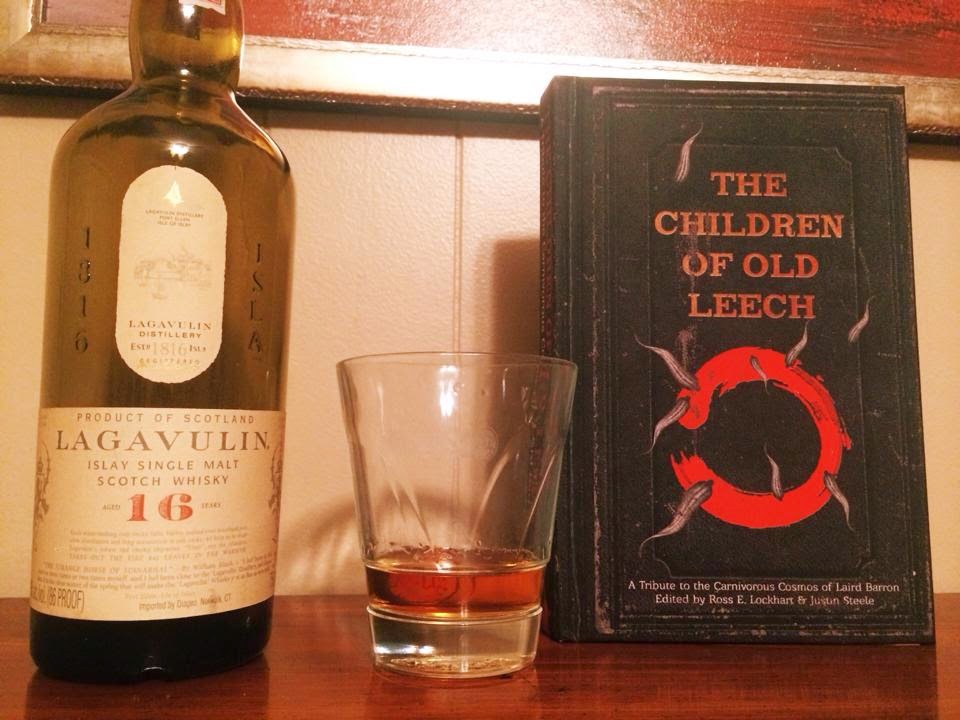
I’m supposed to be writing an introduction. That’s what Ross wanted me to do anyway, but I owe some responsibility to my fellow man, and what we did with this here book, what we unleashed, well, it’s just wrong. I’m sitting here at my desk, a near empty glass of Lagavulin on the desk edge, the bottle in easy reach. Three feet from me, propped in the corner of the room, is a 12-gauge pump-loaded with double-aught buckshot. If that’s not enough I have two .45s and a recently sharpened hunting knife within reach, so no matter how it goes down, it won’t go down easy. But who am I kidding. THEY want me to write this. It’s part of the project. Until my part’s done I’m safe. At least I think so.

I should probably start from the beginning. Tell you how I first discovered this Lovecraft guy, and how reading his fiction kicked me off onto this whole “weird fiction” thing, but I’m sure you’ve heard that one time and time again so I’ll skip ahead a little bit. A few Cthulhu Mythos anthologies into my tentacle binge, I picked up Ellen Datlow’s Lovecraft Unbound, and was pleased to see an anthology striving to avoid falling into pastiche territory. It was during my late night readings that I discovered my first Laird Barron tale. “Catch Hell” did something to me that only a few special stories managed to do: upon finishing I reflected on the story for a minute or two, and then turned back to the first page and immediately reread it. After the second read I walked over to my computer and ordered The Imago Sequence and pre-ordered Occultation. There was no question that I had stumbled upon something special, something dangerous. Who was this Laird Barron guy? He looked like a pirate, or a grizzled Viking warrior. His writing was a blend of genres that I loved. One part pulp, one part noir, two parts pure cosmic terror, blended smooth and seasoned with a literary skill that few possessed. I had found weird fiction for the connoisseur. If I had only known what I was getting into.

Flash forward a few years later, and I’m sitting here in my dimly lit office space, gulping scotch and wondering how I ever let myself get drawn into this mess. The light from my lamp is reflecting off my tin poster of The Good, the Bad, and the Ugly. I let Clint Eastwood’s stoic squint and Lee Van Cleef’s predatory glare serve as reminders that I have to be tough, finish this up. The wind is whipping at the window and I find myself eyeing the 12-gauge once every few seconds.

In September or so I had a conversation with Ross Lockhart, the other man responsible for what we’ve done here. We were both huge fans of Laird’s fiction, recognized its power. By the end of our talk, the wheels were in motion. We were so excited, completely oblivious as to what the actual significance of the anthology would be.

Finding the authors to take part actually proved to be the easy part. Laird’s work is highly respected, and offers authors much to work with. Ross and I wanted to find some of the best writers of weird fiction and offer them a chance to play in Laird’s playground. They could use the more literal elements of Laird’s growing “Pacific Northwest Mythos” or utilize his themes. Pastiche was not welcome. We wanted the authors to use their own unique talents and voices in order to do Laird justice, yet not by simple mimicry.

The thing is, Laird’s fiction is powerful, and not just in the literary sense. Some theorize that there exists some fiction that has the ability to bleed into reality. The words serve a higher function, act as a sort of formula. When these words are read they open a gate to somewhere else, allow them to come over. What Ross and I have done is complete the formula, see? Laird’s works were the base, the true source of the power. With these stories we amplified it, radio towers strengthening the signal.

Ross experienced it first. He’d be out walking his dog in sunny California, or out at his local bookstore when he would see him. Only it wasn’t actually him? Ross would catch a glimpse, just enough for him to realize he’d seen Laird. When he looked back he would see Laird standing there, at the mouth of an alley, or the end of a row of bookshelves. And it was definitely Laird, his mug isn’t the kind you mistake for someone else. Ross was perplexed, he told me later, because he was sure he was seeing Laird. He looked long enough for the imposter’s face to split into a black grin, and then with a wink the not-Laird would duck into the alley or step away from the aisle of books. Ross thought Laird must have been playing some kind of elaborate prank on him, until I pointed him to one of Laird’s blog posts. Apparently some of Laird’s friends have seen this doppelgänger before, but never more than once. I know this spooked Ross, and he hasn’t been the same since. I often ask him if it’s happened again, but whenever I bring it up he goes pale, changes the subject. If I push, he firmly denies anymore sightings, but I have my doubts.

I figured it out. Ross thinks we are just putting together a good group of stories, tries to justify his weird sightings with lack of sleep and too much reading for the project. But I know better, the dots are all there, easy to connect. Several of our authors have confided in me that during the writing process they were fraught with night terrors, and even a few cases of sleepwalking. One author turned in his story in a daze, and swore to me that he doesn’t have a single memory of writing it. One could chalk all this up to writer’s stress, working in overdrive to meet the deadline, but that doesn’t explain what happened with our foreword. A certain big-shot author sent us a foreword, before disappearing. Nobody has heard from him since. Ross and I debated on using the foreword regardless, only to find that it had somehow been erased from both of our computers. Strange coincidence considering we both reside on opposite sides of the country.

And then there’s me. Being woken up in the middle of the night by whispers from friends long departed. Easy enough to pass off as echoes from dreams, but that doesn’t explain why I would find the dog cowering under the bed whimpering. Or the black, sticky footprints left across my kitchen floor, cellar door ajar although I always check the latch before heading to bed.

If you’re still reading this you must now know that it’s too late for you, too. You’ve started to twist the handle, and the opening of the door is soon to follow. You’re going to meet the dwellers on the other side. The Children of Old Leech will soon be whispering in your ear, and they will whisper the same thing they whispered to me: “There are frightful things. We who crawl in the dark love you.”


The Children of Old Leech: A Tribute to the Carnivorous Cosmos of Laird Barron may be ordered directly from Word Horde or wherever better books are sold. Ask for The Children of Old Leech and other Word Horde titles at your favorite bookseller.

Friday, August 8, 2014

The Children of Old Leech Excerpt: “Tenebrionidae” by Scott Nicolay and Jesse James Douthit-Nicolay


Co-author Jesse James Douthit-Nicolay & Missy.


Today brings our final excerpt from The Children of Old Leech, and features a collaboration between father and son, a tale of riding the rails, and secret societies, and gangs, and girls and dogs and far, far stranger things: “Tenebrionidae,” by Scott Nicolay and Jesse James Douthit-Nicolay. Next week, we’ll be back with a little bit more, sharing the book’s introduction and afterword, as well as a gallery of photos. Until then, lie back, listen to the clacking wheels, and enjoy the ride. It is, after all, going to be a dark ride.


The whole room pulsed next and… altered, made no architectural sense. Missy barked and twitched her tail against the bucket and Dumont placed a hand on her back. He felt dizzy and fought the urge to puke. The doorway spun around him several times—round and round and round she goes, and where she stops—Ratch and Worm and Marlo stood. The two sidekicks drifted into place behind Marlo right away, assuming generic bully positions so fast Dumont was tempted to laugh. But Marlo had his K-Bar out beside his thigh and the other two each wore their general bulk as a weapon so no way was it time for wisecracks or laughter. The room no longer spun, only rocked a bit side to side in a seasick way as if whatever whirlwind torqued it had settled in overhead for now.

Lookit the schwag bitch, Marlo sneered at him, spoke the words as a slow smoldering threat. His voice oscillated in tempo as if the distance between them were stretching and receding. Dumont felt another twinge of nausea and struggled to suppress it. Ratch and Worm sneered in their special fleshy ways but said nothing. Missy pressed closer against his thigh, hindquarters stiff with tension as she barked in bursts. He stroked her head to calm her.

—Are you sad because your girl ain’t here? Well you can go ahead an’ cry now ’cause she ain’t comin’. Little Miss Tigger. Turns out she don’t bounce too well.

Dumont didn’t much care to hear what he was hearing but he knew Marlo was s’posed to be big on head games. Didn’t mean any of it counted for a damn thing. If it did then he failed her just like he failed Hector, the kid younger than him at the foster home, what they’d done to him.

He could stand—he was taller than all but Worm—only that would likely take things physical quick, and they were three on one. Maybe they only came to threaten him, scare him into leaving town. They could threaten away. He’d been ready to leave anyway, only with Tigger. But what had they done to Tigger?

She told him about the Shadow Riders almost at the start, how she hooked up with Marlo till someone tipped her off he only wanted her for some kind of sacrifice. How she found it out Dumont didn’t know but the whole story confused him anyway. Tigger was holding some big pieces back, he could tell that easy. Made it all hard to follow but main thing was he could see she was scared. Way shit scared. Now she was missing maybe worse and the Shadow Riders were all up in his face.

He never dealt with Marlo or his crew himself before, only saw them from a distance and Tigger would whisper that’s them or sometimes their names. There were others, Crunch and Skurd, Arkansas Jason and Jimmy Whip, more whose names he could not recall. But Marlo was supposed to be their king or ruler or some shit like that, Ratch and Worm his left hand and right.

Du-mont. That girl took something from me, Du-mont. Something she shouldn’a took. Did she give it to you, Du-mont? I think she did. Hey, we understand how these things can happen. It’s na-chur-al. Why don’t you just let us take a look in your pack Du-mont? We’ll take what’s ours and leave you with your mutt. No harm no foul, whadda you say?

Ratch stepped hands out toward Dumont’s pack. Although he seemed to move in slow motion Dumont didn’t try to block him, but he teetered sideways away from the Rider, his bucket seat tilting almost toppling.

Marlo started to say something like That’s it—and nod before he saw how Dumont slid himself several inches along the wall, bent to grab the bucket handle, then pushed up the wall all the way and with his sea legs at least half back beneath him swung the bottom of the bucket at Worm. Ratch was closest but Worm was the tallest so Dumont went for him first. The bucket with its half dozen rough crusted inches of lumpy concrete at the bottom took Worm full on the side of the head and he. Went. Down.

Missy lunged for Ratch and her teeth sank into his left calf above his boot so he cursed and stumbled back a step. Marlo jerked to his right, brought the K-Bar full up just as Dumont yanked back hard on the bucket only to feel the wire handle tear free from plastic. The battered orange cylinder tumbled away into the shadows and slammed loud against a wall somewhere off in the dark. Everyone looked surprised. Everyone except Worm, who lay staring at the dirt floor. Staring at it real close, like point blank close. Staring at his blood pouring on the dirt.

Dumont yelled to Missy and grabbed the guitar case, booked it for the exit. He felt a tug on his arm as if someone grabbed him and he yanked hard to get free. He heard Ratch pound after him several steps till Marlo shouted —Leave him, asshole! Get the pack! The pack!

Missy hit the doorless doorway ahead of him and staggered as she went. As he trucked through he felt himself swing up sideways on an incline a second, the whole room pitched over the major part of 90 degrees. His applicable senses all told him brace for the fall but he did not fall. Missy yelped ahead so he knew she felt the same still they both pressed on and came level again in three more steps. His stomach prepared to purge but he fought it down one last time, staggered forward anyway. Not now. Not here.

Marlo called from behind —Run sad punk. We’ll see you again. Run run run and we’ll all have some fun. Later on down the line.

Dumont ran. At least half a dozen blocks, Missy skittering always several feet ahead before Dumont felt the warm wetness on the fingers of his left hand and held it up to see first the blood dripping off them, then the red-streaked facing crescents of pink white muscle revealed in the deep slash across his forearm. He was leaving a trail but he didn’t stop to bandage himself till he reached the yard.


The Children of Old Leech: A Tribute to the Carnivorous Cosmos of Laird Barron may be ordered directly from Word Horde or wherever better books are sold. Ask for The Children of Old Leech and other Word Horde titles at your favorite bookseller.

Wednesday, August 6, 2014

The Children of Old Leech Excerpt: “Of a Thousand Cuts” by Cody Goodfellow


Photo courtey of Félix García


Our penultimate excerpt from The Children of Old Leech has arrived, and it’s a doozie. Cody Goodfellow takes us inside The Pageant, the secret, and bloody, gladiatorial matches held in occult locations throughout the world for the entertainment of a select few first glimpsed in Laird Barron’s The Light Is the Darkness, with the Samurai, and “Of a Thousand Cuts.” So prepare your mind by way of strange potions and stranger rituals, sit back, and hang on for a wild ride…


Only in the final, volatile moments of the ludus, when vows made by will are broken by flesh, does the Samurai forget himself and mar his hitherto flawless performance by trying to die.

Dragging his left leg, javelin jutting from butchered knee, hastily resected bowel waving like a gory pennant, yet the Samurai circles his remaining opponent with calculated poise, herding him downwind into the black, creamy smoke wafting from the pyre of his identical twin.

Frenzy and fatigue vie to take the Roman even before the Samurai can close with him. Plunging his broken katana into the smoldering corpse to goad his enemy, the Samurai presents his wakizashi like a gift and settles into a waiting pose.

The Roman has abandoned all technique. Draws a whickering, whooping breath into the broken basket of his ribs, roars hollow blood-flecked hate and charges through charnel smoke, gladius swinging in a blind woodsman’s coup de grace.

And then the moment that puts the lie to perfection, proclaims it the act not of a masterful athlete, but of a slumming, drunken god, or a troubled automaton. Samurai bows his head, arms out in supplication. Throws up an arm, not in defense, but to tear off his helmet. Impossible, of course…

The Roman’s chopping stroke shears an antler from the Samurai’s helmet and glances off his leather cuirass. Overextended, he tramples his opponent and lands among his brother’s blazing remains. Before any outside his inner cadre have noticed his deathwish, the Samurai recovers and hamstrings the Roman. Wakizashi eagerly swims up hyperextended calf muscle, flensing meat catbox-bitter with lactic acid from spiral-fractured bones.

The Roman turns, seemingly revived by blood loss. Brings the gladius down on the Samurai’s shoulder, splitting the torso down to the solar plexus. What little blood comes out at all is almost black.

The wakizashi quivers, sheathed to the hilt in the Roman’s kidney. Samurai’s hand touches but can’t grasp it. The Roman’s spade-shaped sword twisting in the burst balloon of his lung. With his other hand, Samurai draws the javelin from his knee. Nearly faints, but somehow he drives the long spike up through the corded muscles of the Roman’s neck, penetrates the ribbed vault of the hard palate and into the cavernous echo chamber of the gladiator’s brain.

It takes nearly another minute for the Roman’s body to get the message.

It takes the surgical team another seven minutes to separate the bodies and check vital signs to certify the winner. The Roman called Pollux, though stabbed in nine places and burned to the third or fourth degree over ninety percent of his body, almost survives the night.

Shot up with painkillers and adrenochrome, the Samurai lurches out of the arena using the Roman’s enormous gladius as a crutch, to the muted cheers of the small, select audience.

***

In the time after a battle is when it gets worst. He can almost remember who he is.

He knows he had a name.

Before this.

His name.

It was… something.

But in the Pageant…

Now… again and forever… he is the Samurai.

Rumors swirl about the champion few choose to fight, relegated to sideshow matches in pariah state circuses. All but destroyed in six of fifteen matches in nine years, but undefeated, and none have ever seen his face. Even in the pitch-black demimonde of the Pageant, the Samurai is a cipher, his identity insignificant next to the paradox of his survival. Students of the art point to the many awful injuries sustained; not even the Pageant’s surgeons could rebuild such terrible carnage. Indeed, from one match to the next, the Samurai gains or sheds weight and height. Lord Sun makes no promises regarding the identity of the Samurai. Only the masked helmet and the mated swords and the implacable, elegant butchery remain the same.

And yet, the obligatory devil’s advocates must insist, compare the perfect discipline, the rigor of technique maintained even unto dismemberment, the reflexive disdain for mere mortal injury, the true absence of fear of death or pain. No matter how many bodies he’s gone through, it could only be the same man.


The Children of Old Leech: A Tribute to the Carnivorous Cosmos of Laird Barron may be ordered directly from Word Horde or wherever better books are sold. Ask for The Children of Old Leech and other Word Horde titles at your favorite bookseller.

Monday, August 4, 2014

The Children of Old Leech Excerpt: “Ymir” by John Langan


In Norse mythology, Ymir was a being born from primordial frost and poison, who became ancestor to all jötnar, or giants. In the realm of weird fiction, John Langan is also a titan with a penchant for birthing ettins from his armpits and monsters from his feet. What follows is an excerpt from Langan’s story “Ymir,” from The Children of Old Leech.


III


The Eckhard Diamond Mine was a collection of Quonset huts set back from the rim of a titanic hole in the endless white. Barry leaned forward for a better view of it, whistling appreciatively. “Isn’t that something? How far across would you say that is?”

“A quarter-mile,” Marissa said.

“I expect you’re right.”

She stopped the Hummer at the front door of the metal shed closest to the pit. The light green paint that had coated the structure was visible only in scattered flakes and scabs. She left the motor running: the digital thermometer on the dash measured the outside temperature at forty below, and she didn’t want to risk the engine not starting. For the same reason, she was carrying the heavily oiled .38 revolver in a shoulder holster under her coat. She zipped and buttoned the coat, pulled on the ski mask and shooting mittens lying on the passenger’s seat, and tugged her hood up. She half-turned to the back seat. “You ready, Barry?”

He had encased his bulk in a coat made of a glossy black material that made her think of seal skin. The gloves on his large hands were of the same substance. He drew a ski mask in the gray and electric green of the Seattle Seahawks down over his broad, bland face. “Ready,” he said. “Let’s go look at my new investment.”

Marissa had expected their arrival to draw some kind of reception from whoever was inside the hut. The moment she stepped outside, however, into cold that shocked the air from her lungs, that she felt crystallizing the surfaces of her eyes, she understood why those inside and warm might prefer to reserve their greetings for her and Barry joining them. The cold seemed to take her out of herself; it was all she could do to keep track of Barry as he lumbered the fifteen feet to the hut’s entrance. Without bothering to knock, he wrenched the door open and squeezed through the frame. Marissa followed, giving the area surrounding this end of the building a quick once-over. She wasn’t expecting to see anything besides the Hummer with its schoolbus yellow paint, a steady cloud of exhaust tumbling from its tailpipe, the great hole in the earth in the background. Nor did she.


The Children of Old Leech: A Tribute to the Carnivorous Cosmos of Laird Barron may be ordered directly from Word Horde or wherever better books are sold. Ask for The Children of Old Leech and other Word Horde titles at your favorite bookseller.
Wednesday, July 30, 2014

The Children of Old Leech Excerpt: “The Woman in the Wood” by Daniel Mills


Today’s The Children of Old Leech excerpt comes from Daniel Mills’s epistolary story about a young man who has traveled north, after troubles at home, “The Woman in the Wood.”


From the diary of James Addison Thorndike II (1828-1843?)

15th July. Friday.

I found it in the fields near the pine-wood.

The beast was lying on its side & I thought perhaps it was sick. But I smelled the rot as I drew near & saw its blood splashed through the grass—

This morning it rained, though the skies were clear by noon. The day was hot so I wore my linen shirt & trousers. I ate sparingly of the dinner my Aunt had prepared (mutton roasted & charred) and afterward announced my intention to walk outside on my own as Father would never have permitted in Boston.

I walked the fields for the best part of an hour without seeing man or beast. Then I came over a rise & saw the great herd of them before me. They were grazing at the end of the stony pasture: dumb & grunting & caked in their own filth.

I went eastwards & climbed over a wall to the adjoining field where the land slopes down to the neighbors’ property & the pine-wood, which lies in a depression between so that none know for certain who owns it (or so my Uncle says).

The grass is higher there & that is where I found the ewe.

Uncle Timothy was at work in the pastures to the south. I ran toward him, waving & shouting & he came to meet me at a sprint. I told him what I had found & he sent me back to the house. Then he called to Auguste, one of the hired men.

Come, he said. And bring your gun.

I went back to the house & told Aunt Sarah that I had found a dead sheep. She said it was probably dogs or a wolf, but Uncle Timothy returned to the house at dusk & said it was likely a wildcat, though he hadn’t heard of them coming so far south, especially in the summer.

Supper was strained & silent. Aunt Sarah was quiet where she sat opposite me & I could not meet her eye without thinking of the pasture & what I had found there.

I had no appetite. I asked my Uncle if I might be excused & he nodded.

So I came upstairs, thinking I might read Wieland, which had been Father’s gift to me before leaving. But I could not touch my books & I passed the evening by the window, watching the clouds as they covered the moon & the stars.

***

without thinking of the beast where it lay in the grass with its mouth forced open, the jaws broken & the organs wrenched from out the shattered mouth: its heart & lungs & the ropes of its intestines, spread out on a slick of blood & the stench of shit coming from the mass of them where the sun’s shone down through the day


The Children of Old Leech: A Tribute to the Carnivorous Cosmos of Laird Barron may be ordered directly from Word Horde or wherever better books are sold. Ask for The Children of Old Leech and other Word Horde titles at your favorite bookseller.

Monday, July 28, 2014

The Children of Old Leech Excerpt: “The Last Crossroads on a Calendar of Yesterdays” by Joseph S. Pulver, Sr.


Today’s excerpt from The Children of Old Leech comes from a story about monsters–human and otherwise–and books of magic, and blood and ashes: Joseph S. Pulver’s “The Last Crossroads on a Calendar of Yesterdays.”


To and fro. Rocking. Slow.

Slow.

Measured, not sluggish. Predator readying true for ignorant prey.

To…

and back again. His grip not far from the shotgun.

The old man sipped his sweetened coffee from an old porcelain mug. From his hillside porch he stared into the night-darkened forest toward what was no longer the Hambly property. Old discomforts and slowmotion anger was a butchering quicksand that was bringing on tears. Kellerman put the filtered-tip cigarette to his lips and inhaled. Took the smoke deep. Held it. Exhaled. “Ruined, Zina… Bastards have ruined it.”

“—against the horde of insidious parasites.”

“You are the White… American… Dream. You are the defenders of White European culture and heritage. Your commitment and actions preserve what Our American Fathers—Benjamin Franklin, George Washington, and John Adams—shed blood to establish and protect… our Great White Nation. You are America’s true patriots.”

Pride-roasted cheers and a vigorous round of applause billow through the compound carved-out of the darksome forest of rugged pine.

“WAR DAY.” The voice of the Allfather or a blood-and-fire Jehovah at 110 decibels thunders from the loudspeakers and echoes in the hills. “Is a HOLY DAY!”

Another explosive burst of applause followed by a chain reaction of Nazi salutes expressing their pathological eagerness. Amens dash like snarls. Three semiautomatic handguns bark and send their payloads skyward. Two sisters, paleskinned twins married to paleskinned brothers, rise from their seats and begin singing a bastardization of “Onward, Christian Soldiers.” Their enflamed voices are joined by ten and ten and ten and ten. Fifty-strong becomes nearly one hundred.

Once Metzger disciple, before the riff became a chasm, Walter Warren smiles on the crowd. “In a week this compound, the new home of the White Liberation Alliance, will be completed. God is pleased with your work, brothers and sisters. God is pleased.”

Not enough miles away, or countries for that matter, Kellerman caught the amplified words. He’d heard the raised voices sing and the gunfire. Heard them last Saturday night, and too many times in the last months.

“Nazis.”

Zina sat up. Growled.

The old man shivered.

Zina stood, faced the black woods, offered the thunder her teeth and an unsheathed promise steeled with Till-Death-Do-Us-Part loyal.

Twenty years since he’d briefly lived in Olympia, in the distance below. Twenty years since he’d come west to these hills and hollows, hoping to find balm. There were small moments when he could pretend (if the sky was soft summer blue and the sun warm and the blooms gave off sweet scents) the beauty it held helped. Kellerman was an old man now, felt it when the cold ruled muscle and mind mercilessly, saw it sear the tired face the mirror slapped him with. The nightmares and wounds (still a bullet to heart and mind no prayer could moderate) of the small boy he’d been, the boy the Americans liberated from Buchenwald, now fully reawakened by the hate that had invaded his property, were, these last few months, as loud and haunting as the last breath of his cancer-ridden wife.

Kellerman’s right hand stroked Zina between her ears. “Yes, girl, I know.”

He stood and stubbed out his cigarette on the porch boards, picked up his mug, his shotgun, and turned to go inside. “Little good it will do, but we will try the Authorities again tomorrow, girl.”

Zina, ninety pounds of unwavering attentiveness, settled at the foot of his bed. His Mossberg rested against the nightstand. Kellerman’s hands were trembling fists as he fell asleep.


The Children of Old Leech: A Tribute to the Carnivorous Cosmos of Laird Barron may be ordered directly from Word Horde or wherever better books are sold. Ask for The Children of Old Leech and other Word Horde titles at your favorite bookseller.

Friday, July 25, 2014

The Children of Old Leech Excerpt: “The Golden Stars at Night” by Allyson Bird


For today’s excerpt from The Children of Old Leech, we travel to New Zealand in order to bring you a taste of Allyson Bird's “The Golden Stars at Night,” a story that explores the fragility–and uncertainty–of life within a carnivorous cosmos, where horrors unknown wait beyond the safety of firelight.


Her name was Rawlie. She chose the name, obviously not at her birth but later—not gender specific and that empowered her for a good reason. She’d need to be strong. Rawlie had seen the world change. Sitting on the stile near the stream bank amongst the manuka trees she tied her brown hair back and shielded her grey eyes from the winter sun. It was still strong. All year round they had to be wary of it in New Zealand. It wasn’t uncommon for many newcomers to fold with the heat and humidity. She was the first to rise too—just a quarter hour before the others but with enough time to grab a mug of coffee and wrap up warm against the cold. The mountains were visible today, still tipped with snow and rosy in the dawn light. Some days were better than others. The worst days started with her father sending a couple of ranch hands down to the main gate. They would wave a rifle in the air. Nobody set a foot on Campbell land without prior permission.

The day on the station would be a long one and she was always the first to go to bed each evening—exhausted from trying to be as good as or rather better than others. That was what she wanted. What she needed was to stay alive, eat, sleep and fuck. Her mind nowadays was closed off pretty much—kept apart from most others in some cosmic shadow of itself. She wondered what lay in—within the darkness whilst she tried to sleep. Not really of this world perhaps? Or a forgotten part of it? They seemed ever closer now.


The Children of Old Leech: A Tribute to the Carnivorous Cosmos of Laird Barron may be ordered directly from Word Horde or wherever better books are sold. Ask for The Children of Old Leech and other Word Horde titles at your favorite bookseller.

Wednesday, July 23, 2014

The Children of Old Leech Excerpt: “Firedancing,” by Michael Griffin


Today’s excerpt from The Children of Old Leech comes from Michael Griffin‘s “Firedancing,” a tale of haunted people, haunted places, and haunting actions. So pour yourself a dram of the good stuff, sit back, and enjoy…


“Thoughtful of you.” Bay tips back the Jim Beam fifth. The bottle knocks the ceiling inside Petersson’s posh gentleman’s pickup. “I was gone just a few hours. She managed to empty the place. Must’ve hired—”

“I said, don’t talk about that. Don’t think about that.” Petersson’s driving, I5 South. Three hours to Roseburg. “Lesson I learned after Minerva skipped. Obsessively sifting back, through everything, that ain’t what you need.”

“What do I need?”

“Mental reboot.” He grins. “Puke your troubles away at a two-day party.”

“So this Mallard Hill place, it’s where Erik and Minerva grew up?”

“Mmm. Fifteen miles outside Roseburg.”

“Speaking of Minerva.”

Petersson’s grip flexes on the wheel.

Bay tries again. “The worst thing about Annie leaving, I finally did what she wanted. Took a commission, murals for Cinema 21, that’s an art theater in Northwest.”

“I know, dummy. Film major, remember? You took us there.” He exhales. “Seven Samurai. Me and Minerva.”

“Lumber baron with a film degree, that’s funny. Most of us liberal arts guys…” Bay stops. Another swig. “Annie set it up, knew the owner. They kept showing up, checking on me. Arrive together, leave together.”

“We weren’t going to talk about that.”

Bay thinks, What else? “So Erik grew up on this hill, but won’t attend the big drunk-fest?”

“Nah, he stopped that recovery shit. After he withdrew from us, his sponsor tried to make him cut off Minerva.” Petersson shrugs. “Erik only drinks beer now. Lives on the edge of the Mallard tract, a cabin overlooking the South Umpqua. Started some river guide thing. Fishing, rafting.” His face clouds. “Minerva’s in the main house. Stopover from the endless touring.”

“So much land, Erik gets his own corner.” Bay resists redirecting toward Minerva. Petersson’s breakup makes him feel less awful.

“Might be the most impressive parcel in Douglas County. Everyone thinks Old Mallard got rich in lumber, but Minerva let slip he returned from the Merchant Marines, World War II, a millionaire at nineteen.”

“Merchant Marines, is that still a thing? Maybe they’d let me—”

“He climbs aboard the post-war lumber boom, builds Mallard Hill. Meets a woman up in Washington, on business near Olympic Forest. This first wife starts him jetting around, blowing millions in Mexico. Spends the sixties and seventies financing films, legendary stuff by Buñuel and Jodorowsky.”

“Lest I forget that film degree.”

Petersson makes an undignified snort. “Always trekking the wilds of Mexico, South America, Antarctica, returning rejuvenated, trailing new wives to replace ones who die of typhus or malaria. Finally disappears, the Chilean Andes. Erik and Minerva, living under Old Mallard’s tutors and housekeepers, assume they’re orphaned a second time. Everyone gives up hope.”

“But…”

“He reappears, head shaved, silent as a mystic. No explanation where he’s been ten months, what happened to wife number six, seven, whatever. Thereafter, no more film production or travel. Grabs another wife to replace the one rumored frozen to death. Further expands the house. His only indulgences are these parties, and the visiting artists, visionaries and occult weirdos. Some remain months, years at a time. Old Mallard, he’s like fucking Tom Bombadil. Erik grew up thinking the man’s his grandfather, later learns, no, it’s great-grandfather.”

Bay stifles envy at such a life. “One part Dos Equis’ Most Interesting Man in the World, one part Kwai Chang Caine.”


The Children of Old Leech: A Tribute to the Carnivorous Cosmos of Laird Barron may be ordered directly from Word Horde or wherever better books are sold. Ask for The Children of Old Leech and other Word Horde titles at your favorite bookseller.

Monday, July 21, 2014

The Children of Old Leech Excerpt: “Notes for ‘The Barn in the Wild,’” by Paul Tremblay


Today’s excerpt from The Children of Old Leech comes from Paul Tremblay‘s “Notes for ‘The Barn in the Wild.’” Paul initially submitted his story as both typewritten text and as a hand-written manuscript. The typeset text appears in the final book; the facsimile pages became the basis of our sold-out chapbook, Notes for “The Barn in the Wild.” This is the first time anyone who doesn’t have the chapbook has seen these pages. But no matter how you read it, Paul’s story is sure to elicit a chill.


Tommy’s body was found by Antoine and Brandon LaForge (father and son snowmobilers) on March 24th. Stephens presented me a photo of the body. Tommy’s all curled up in a tight ball, lost inside his puffy anorak. Adjacent to him are the dead coals and black ash of a spent fire pit. Tommy likely died of starvation sometime during the previous fall. Five fingers on his right hand were missing. The coroner was unable to determine if fingers were removed by critters post-mortem because of the advanced state of decay of the body.

Were any other body parts missing?

“No.”

Isn’t it odd that animals didn’t take anything else?

“Who knows why animals do anything they do?”

Tommy’s hands look to be hidden tight into that ball of rigor mortis. Stephens agreed. There was evidence of frostbite in Tommy’s toes and Stephens suggested (admitted it wasn’t likely), that perhaps Tommy cut his fingers off himself after suffering from severe frostbite(7). Next an itemized list of the meager supplies found in Tommy’s possession, including a camera. They were only able to produce a handful of pictures from the film in his pack and in his camera, the rest were washouts: one photo of a woman in a small apartment kitchen, hiding her face behind a dish towel(8); three photos of woods, the hiking trails nearly indecipherable in the brush; an open field with the barn as a dot in the far background; the last picture is a self-portrait of Tommy sitting up against the barn, his hair wild, baby face tufted with facial hair, gaunt and emaciated, facial fat and muscles melting away, replaced by the hard angles of what lies beneath(9), but he doesn’t look like he’s suffering or in pain, but with the content, wild, ecstatic look of a zealot. He sits with his back up against the side of the barn but toward the front. Above his head, and in the upper right hand corner protruding out from the front of the barn, is an ornamental structure, like a deer’s head in profile, and I do think it’s some sort of animalistic avatar or totem, only the neck is elongated, but the head has no antlers, or ears, or much of a snout, it’s oval, tapers to a rounded point at the bottom, human?

7) I’ve had frostbite, and I’ve had it at 20,000 feet, but didn’t cut off my fingers. I’m partial to them. Do people do that? Apparently yes: see, Sir Ranulph Fiennes.
8) Nadia?
9) Unfortunately, I’ve seen that face before. You will see it again.


The Children of Old Leech: A Tribute to the Carnivorous Cosmos of Laird Barron may be ordered directly from Word Horde or wherever better books are sold. Ask for The Children of Old Leech and other Word Horde titles at your favorite bookseller.

Friday, July 18, 2014

The Children of Old Leech Excerpt: “The Old Pageant,” by Richard Gavin


Today’s excerpt from The Children of Old Leech comes to us courtesy of Richard Gavin, an author who knows a thing or two about the carnivorous nature of the cosmos. So let’s head out to the woods with this sample of “The Old Pageant.”


He didn’t want her to know how physically taxing he’d found the long drive to the woods, how tedious the prospect of unpacking seemed, or how repugnantly primitive he found their accommodations to be upon their arrival. The holiday had the potential to be far too special an occasion for him to sour it by sulking.

The cabin had been in her family for decades, though the moment he spied it—an oblong box slumped between leprous-looking birch trees—he wondered why she didn’t regard the cabin as a skeleton from her family’s closet instead of a prideful heirloom.

After an anxious struggle to fit the copper key inside the ancient lock, the door gave, allowing the pair of them to be assaulted by the stench of long-trapped air. The dark had evidently grown so accustomed to the cabin’s interior that it stubbornly refused to part for the sunbeams that the man and woman ushered in.

Shutters were peeled back, windows were pried ajar. She stripped the ancient white sheets from the beds and took them outside and hung them from the birch limbs so that the breezes might push out their mustiness.

They cleaned and unpacked and traded off-colour wisecracks. The supper they cooked together was hearty and its aroma managed to mask a bit of the cabin’s cloying staleness.

After eating he delighted her by finding the detached footboard that had once braced the lower bunk bed she’d slept on as a girl. It had been wound in a shower drape of translucent plastic and stored behind her grandmother’s dormant sewing desk.

Her grandfather had carved (with visible skill and obvious love) an inscription into the footboard:

Here lies Donna Hammill
Each and every summer
Dreaming…


The Children of Old Leech: A Tribute to the Carnivorous Cosmos of Laird Barron may be ordered directly from Word Horde or wherever better books are sold. Ask for The Children of Old Leech and other Word Horde titles at your favorite bookseller.

Wednesday, July 16, 2014

The Children of Old Leech Excerpt: “Love Songs from the Hydrogen Jukebox” by T.E. Grau


Yesterday was the official release date for The Children of Old Leech, and many of you were able to join us online for our virtual release party and toast to Old Leech. Many a libation was poured in the name of cosmic horror. But a day-long celebration can make the next morning one for sober reflection and deep spiritual contemplation. So let’s go to church, and get a little bit of that old-time religion with T.E. Grau and this excerpt from his “Love Songs from the Hydrogen Jukebox.”


Thousands of people stood patiently in a queue that spiraled around the structure, looking inside the doorway, hoping to get a glimpse of what lay beyond. As they waited to reach the door, men and women, nearly indistinguishable from each other due to the lack of facial and cranial hair, walked up and down the line holding bins labeled “DONATIONS TO THE FATHER” in pink, bouncy letters. As each pilgrim walked past, they dropped in wallets, watches, jewelry. Some even tossed in their clothes, returning to the line in various stages of undress as the shadows of trees and peaks cut slowly across the clearing.

I walked past the line with Doyle, heading toward the entrance. Just like with every joint on the Hill, Doyle never stood in line. VIP all the way, regardless of the geography. “Why are they doing that?” I asked, motioning to the rapidly filling bins, trying to avoid the sporadic nakedness, as my blush would surely out me as a prude.

“You can’t enter the temple burdened by the outside world,” Doyle said. “Cuts down on the transmission, like lead between an X-ray. But aside from all that,” he added, shooting me a mischievous grin, “everything’s better when you’re naked.”

I looked around at the variety of mostly unclothed flesh, noting the variety in shape and size and skin tone and hair density. “I don’t know about that.”

Doyle laughed and threw his arm around my shoulders, kissing me on the side of the head. “You’re a real peach, you know that, Barnacles? If I didn’t like pussy so much I’d marry you tomorrow.”

We walked to the front of the line and passed through the wide doorway. The side of my head where Doyle’s lips touched it throbbed with a liquid warmth. Neither of us had removed any clothing, but I felt more naked than I’d ever felt in my life.

Inside, people were seated on a dirt floor in evenly spaced lines, just inches apart from each other, like a mosaic of humanity. The air was heavy with burning incense that billowed from giant copper braziers hanging from thick chains bolted to the vaulted ceiling of the dome, that wasn’t as naturally sloping as one would expect from the outside, but possessed a hyperboloid geometry that made me dizzy. Or maybe it was the smoke, which smelled just like Doyle’s strange little cigarettes.

The hushed congregation was facing a low stage built at the front of the cavernous space, backed by heavy curtains of a thick and lustrous fabric. Doyle led me to the far end of the room, just in front of the rise, and squeezed my shoulder. “Wait here,” he said into my ear, “and don’t get on stage, no matter what I say.”

The bell chimed again, startling me, mostly because it seemed to be coming from directly underneath the room, somewhere deep under the mountain, and not from a hidden steeple. This is the church, this is the steeple, open the door, and see all the people… I realized after a few fuzzy moments that I was staring down at my waggling, intertwined fingers. Perhaps I was becoming a child again, as well. I looked up to show Doyle, but he was gone. The recessed lights hidden in a gutter circling the high walls dimmed at that moment, and the tolling of the bell abruptly stopped. I could hear the beating of my heart in my ears. It was a slow, syrupy rhythm. The sound of an organ in mid-dream.


The Children of Old Leech: A Tribute to the Carnivorous Cosmos of Laird Barron may be ordered directly from Word Horde or wherever better books are sold. Ask for The Children of Old Leech and other Word Horde titles at your favorite bookseller.

Monday, July 14, 2014

The Children of Old Leech Excerpt: “Snake Wine” by Jeffrey Thomas


Today’s excerpt from The Children of Old Leech leaves the familiar–and frightening–confines of the Pacific Northwest for a locale on the other side of the world: Vietnam. Let’s crack open a bottle of “Snake Wine” with author Jeffrey Thomas.


In his flat on the third floor of the narrow building he had bought with all his savings, ill-gotten and otherwise, Hong pulled a bottle out of the plastic shopping bag she had fetched from her Honda’s seat compartment. “My father likes to drink this sometimes,” she told Gorch. Smiling with charming if unconvincing coyness, she further explained, “It’s good for a man’s baby.”

“Baby?”

“You know,” she said. She pointed toward his crotch and giggled.

“Ah, I see. Makes baby grow up big and strong, yeah?”

“Yesss.”

“Let’s have a look.” He held out his hand. “I’ve seen these things a million times here but I’ve never really wanted to try it before.”

“Oh, but you will drink this one, won’t you? Because it is from me?” She passed him the bottle.

“For you, and for my baby, I’ll do it.”

It was a bottle of ruou, or rice wine, and he had drunk that on its own. But this type of ruou, which he’d seen sold at gift shops such as those at the Cu Chi Tunnels and the Saigon National Museum, had conspicuous extras stuffed into the bottle. Usually it was a cobra, preserved in the yellowish wine as if pickled in formaldehyde, maybe with a huge black scorpion or a fistful of smaller snakes and some herbs added for good measure. Hong’s gift did have some blanched-looking herbs at the bottom, but no scorpion, and the snake coiled inside wasn’t a cobra, unless its hood was closed.

Gorch turned the bottle around slowly to see it from all angles, and held it up in front of the fluorescent ceiling light. His brows tightened. Definitely not a cobra. And maybe it was a result of the animal’s saturated tissues being distorted, but he almost questioned whether it was even a snake. He was reminded of the animal called a worm lizard, an amphisbaenian, which possessed a long pinkish body that looked segmented like an earthworm, with only a rudimentary pair of forelegs. It almost seemed this creature had such forelimbs, if withered, unless those were just bits of sloughing skin. Its eyes were bleached dull gray. It was looped in on itself within the glass, coiled around and around in a spiral as if chasing itself unto infinity.

“A dragon fetus, perhaps? Ace.” He handed her back the bottle to open. He took down a shot glass. “Are you going to drink it with me?”

“It’s a drink for men,” she told him. “I don’t have a baby.” Her smile was a mixture of carnality and passable innocence that made his stomach squirm with hunger, as if he had his own dragon fetus coiled inside him.

She filled his shot glass, and he took a tentative sip. He tried not to show his disgust lest he insult her. After all, her father had unknowingly sacrificed this elixir for his benefit. It tasted just as he had expected: crude rice wine mixed with the essence of a reptile terrarium.

“Do you like it?”

Gorch didn’t think he’d be stocking this beverage in his pub anytime soon, but he said, “A fine vintage. Cheers.” He took another sip.


The Children of Old Leech: A Tribute to the Carnivorous Cosmos of Laird Barron may be ordered directly from Word Horde or wherever better books are sold. Ask for The Children of Old Leech and other Word Horde titles at your favorite bookseller.

Friday, July 11, 2014

The Children of Old Leech Excerpt: “Good Lord, Show Me the Way” by Molly Tanzer


...we love you...


We close this week of excerpts from The Children of Old Leech with Molly Tanzer's epistolary tale of academic horrors, "Good Lord, Show Me the Way."

  ---

 Gasoline Fire Burns Olalla Man; Destroys Home 
By Jim Warren 

April 27th, 1992 -- Early Tuesday morning, Burton Wulla Fines was admitted to Tacoma General Hospital with severe burns covering the left side of his face and body, and a mangled left hand, also burned. 

Sally Wallings, a neighbor, called 911 at 1:18 AM when she spotted flames reaching above the trees between their properties, alerting local authorities to "a powerful inferno" on the premises. When firefighters arrived they found Mr. Fines' home ablaze, along with several adjacent trees. Fines himself was discovered wandering around one particularly large spruce, throwing gasoline on it from a can from time to time, and "ranting" according to volunteer firefighter Glenn Woodworth. 

"We tried to get him away from the tree," said Woodworth, "but he wouldn't come along. He kept shaking his fist at it and accusing it of being 'infested' and that he 'wouldn't submit' to the will of its 'agents.' He claimed it had 'whispered to him for the last time,' that he would burn out the Great Satan within, and be done with the business." 

"Brent had always hated that tree," confirmed Wallings. 

Woodworth and the rest of the firefighters entrusted Fines to the paramedics who had arrived on the scene in order to fight the fire consuming his house. Soon after, all present reported hearing an "explosion" and returned to find Fines scorched along the face, body, and hand. With the help of the paramedics, Fines' clothes were extinguished and he was taken to Tacoma General. Sadly, this blast resulted in the burning to the ground of Fines' home. 

When asked why the paramedics had not removed Fines from the site of the burning tree, they replied he became "belligerent and abusive" when they tried. At the time he tossed the can of gasoline onto the tree, causing the explosion that burned him, the paramedics had been discussing methods of restraining or sedating him. 

"He accused us of conspiring with 'vassals of The Great Satan,' whatever that is; that we were there to 'bind him' or something like that. He was pretty incoherent by then," reported Jim Baker, an EMT. Fines remains in critical condition at Tacoma General. 

 ---

 The Children of Old Leech: A Tribute to the Carnivorous Cosmos of Laird Barron may be ordered directly from Word Horde or wherever better books are sold. Ask for The Children of Old Leech and other Word Horde titles at your favorite bookseller.

Wednesday, July 9, 2014

The Children of Old Leech Excerpt: “Learn to Kill” by Michael Cisco


Today’s excerpt from The Children of Old Leech comes from Michael Cisco‘s patricidal tale, “Learn to Kill.”


Nodded off! How long was that? Everything looks the same. My boots, bony knees, knuckly hands. My chair. The window. Bare boards.

Lessons from Dad. When I was about eight or nine, I decided, I forget why, to provoke my father. I was very contrary and then, I remember standing stock still shouting

“FUCK YOU! FUCK YOU!”

at him. He smiled at me, queerly. Then he went and shut himself up in his room. That was his sanctum. He padlocked it when he wasn’t in it. I wracked my brains for a way to get in, and I never did. With all my ingenuity, my genius for trouble, my intuitive sense of escape routes and infiltrations, when there was no hillside full of dense foliage I couldn’t wriggle inside somehow, to think, I never managed it. I never saw the inside of it, even after I killed him.


The Children of Old Leech: A Tribute to the Carnivorous Cosmos of Laird Barron may be ordered directly from Word Horde or wherever better books are sold. Ask for The Children of Old Leech and other Word Horde titles at your favorite bookseller.

Monday, July 7, 2014

The Children of Old Leech Excerpt: “Walpurgisnacht,” by Orrin Grey


Our third excerpt from The Children of Old Leech comes from “Walpurgisnacht,” by Orrin Grey. Traditionally, April 30th marks the feast of Saint Walpurga, an 8th Century German Abbess. But it’s also held to be the night that witches meet and revel on the Brocken, the highest peak in Germany’s Harz Mountains…


On the train, Nicky told me about the Brocken Spectre. “It’s a sort of optical illusion,” he said, leaning forward, his elbows on his knees. Nicky was younger than me, and prettier, and his dark hair fell in front of his face whenever he slouched, which was often. “The sun casts a giant shadow of you on the clouds below, right, and your head gets this prismatic halo. Like an angel.”

“I hear the sun only shines here like sixty days a year,” I said. “Besides, it’s night.” I was only half-listening anyway, my head lolling against the cool glass of the window. I’d had more than a few drinks at the airport bar, and I could feel a headache trying to force its way out past my eyes. Outside, I could see our destination looming up out of the darkness, the two towers of the Sender Brocken, old and new. Like Tolkien’s Minas Morgul and Orthanc. The sun was still going down, and the towers stood out like shadows against the gloaming, their lights already on. Gleaming yellow ones in the windows of the old tower, now the Brocken Hotel, and blinking red ones to warn planes away from the new tower, a candy-cane-striped lance that jutted skyward from the peak.

“It doesn’t look terribly inviting,” Nicky said, noticing my inattentiveness and nodding at the towers.

Now to the Brocken the witches ride.” I intoned, and then, without bothering to glance and see his puzzled expression, explained, “It’s Goethe. From Faust.”

That was why we were going, of course. It was Walpurgisnacht, the night when the witches and devils gathered on the crown of the bald mountain to welcome the spring. Nicky and I, and whoever else was on the train with us, were the witches in this equation, and we were all gathering on the Brocken to kiss the ass of a black goat.


The Children of Old Leech: A Tribute to the Carnivorous Cosmos of Laird Barron may be ordered directly from Word Horde or wherever better books are sold. Ask for The Children of Old Leech and other Word Horde titles at your favorite bookseller.

Friday, July 4, 2014

The Children of Old Leech Excerpt: “Pale Apostle,” by J. T. Glover and Jesse Bullington


 Photo Courtesy of Nick Gucker.

Today’s excerpt from The Children of Old Leech comes from J. T. Glover and Jesse Bullington's collaborative tale, “Pale Apostle,” which I’m sure you’ll agree sets up the fireworks with a dangerously short fuse…


The bell at the front of the shop tinkled, and Wah clicked her teeth—she hadn’t heard his key in the lock, which meant he’d left the door open again. It was bad enough he insisted on making deliveries to all the family associations himself, but his forgetting to lock up was simply unsafe. Ducking through the curtain, her slippers whisking against the boards, she saw his familiar silhouette across the dark shop. He’d turned and was locking the door.

“It doesn’t do much good, now,” she said, trying to keep the chiding tone from her voice. “When I’m in the back, though, try to remember to—oh!”

The white man smiling at her across the shadowed bins and shelves was not her father.

“I sorry, honorable sir, but we closed right now,” she said, speaking with deliberate fresh-off-the-boat awkwardness even as her mind raced.

Her father was probably talking over old times at some association by now, and might not return for hours. It wasn’t late enough yet for the police to be rattling doorknobs, and they rarely took much notice of crime in the Chinatown anyway. Who would hear if she screamed? Mr. Dong next door, perhaps, but perhaps not…

Top shelf, middle aisle. As she stepped around the counter, she studiously kept her eyes on the intruder, instead of the modest display of cutlery. If she could just—

“How excellent,” the stranger said, speaking in perfectly unaccented Szechuanese as he glided toward her, past the knives. “That means we shall not be disturbed.”

The smile he gave her stretched his strangely ageless face into a rictus—like most white men, his exotic features somehow coalesced into a bland, nondescript whole. His black coat and broad-brimmed hat were wet with the night’s rain, leaving puddles on the floor, but his skin looked parched as scrolls from a temple. He reached inside his coat, and Wah flinched, wondering if it would be a weapon, or worse, handcuffs—given the choice between a stickup man or a plainclothes Seattle policeman, she would take the lesser villain. Instead, he held out an envelope to her, as dry as the withered hand that held it.

“My name is Clarence Kernochan, and I have a business proposition to discuss with you.”

“My father—” Wah began, but he cut her off in the rude fashion of Americans, waggling the envelope.

“I trust you will surely find this to the advantage of both yourself and your father, Miss Sung.”

Wah looked back at his face, and in the instant before she saw him straight-on, she could have sworn that his black pupils seemed to undulate, as if something wriggled behind them.


The Children of Old Leech: A Tribute to the Carnivorous Cosmos of Laird Barron may be ordered directly from Word Horde or wherever better books are sold. Ask for The Children of Old Leech and other Word Horde titles at your favorite bookseller.


Links: Hardcover (Barnes and Noble, Amazon), Nook, Kindle.