Showing posts with label word horde. Show all posts

Friday, June 5, 2015

Interview: Molly Tanzer Talks Vermilion


To start, this is your first novel? How did it feel to finish such a big project?

It’s certainly my first published novel. I typed THE END on my first novel back in… gosh, maybe 2008? 2009? It was fun, but it was definitely training wheels time. I think that beast was like 175k, and it was bonkers. The second novel I wrote I feel no affection for whatsoever; in fact, I deleted it from my hard drive when I finished it, it was so awful. 

As to your second question… I’ve experienced various sensations at various times, with Vermilion. Finishing the first draft felt great. Finishing the draft that went out on submission felt… exhilarating. Finishing the version that’s now printed and thus no longer editable felt pretty terrifying, actually!

Much of your fiction takes place in historic time periods, but to my knowledge this is your first time writing a Western. What attracted you to this setting? What did you set out to do with the tropes and the genre?

My initial desire to have a conversation with the Western came about when I moved to Colorado. The scale of the landscape was amazing—I had visited before, but waking up every day to see mountains, being able to explore them at my leisure… living right where the prairie meets the front range… wow. It triggered my memories of being wild for the Little House books as a kid, and bam, I wanted to write something about this place. Uh, and I was also watching a lot of Deadwood.

The thing is… as you noted, Westerns have certain tropes. Most modern Westerns, in terms of novels and film/television, seek to either draw attention to those tropes, or to invert them, because even though the Western has fallen out of favor, we’re still all too aware of those conceits. In terms of characters, you have the Gritty Loner, the Native Threat, the Trifling Whore vs. the Good Woman, and so on. In terms of plots, you have A Stranger Comes to Town, the Man with a Past, The Person from Back East Who Must Leave Civilization Behind, and so forth and so on. Because they’re all very familiar, a Western that unconsciously draws on tropes can come off as feeling a bit outdated… take Appaloosa, the film, for example. While it was an enjoyable movie with a lot to like, I was annoyed by the movie’s embrace of the Trifling Whore trope in Renee Zellweger’s character. Maybe it’s a holdover from the novel, I’m not sure, but regardless, it was boring because it was just so dang familiar.

With Vermilion, I wanted to invert the Western while still paying homage to and drawing on the tropes of a genre that I love. So, while I might start with a Gritty Loner as a hero(ine), she goes East, not West; she moves from a state of detrimental independence to flourishing under positive interdependence (in the traditional Western, the hero usually has to “go at it” alone, leaving behind any wimminfolk or friends). Additionally, throughout the novel, traditional outsiders, even within the “Weird” Western, such as women, progressive thinkers/social radicals, and racial minorities prove more “civilized” and establish order much more effectively than those in a position of privilege. Oh, and of course, Lou is a person of color, and she gets a white sidekick. That was also fun to write!

One of the major themes throughout the book is gender fluidity and sexual orientation. Could you discuss why you chose to explore these themes at length and what you hope readers took away from this theme?

First and foremost, I write what I like to read! But it was also part of my mission above. Classic Westerns are often relentlessly heterosexual—or at least, they try to convince us they are, by having rough-and-tumble ‘good buddies’ visit a whorehouse or get married to make it clear they’re not really hot for one another. Hell, even Red River, which is famous (infamous?) for its awesomely homoerotic subtext, pairs Montgomery Clift’s Garth with a lady at the end, much to Cherry’s dismay. I’m having a hard time even coming up with a classic Western that features lesbians, or the implication of lesbianism. Maybe a little in East of Eden, but like, that’s kind of a stretch. (If anyone knows of any, let me know in the comments!)

Westerns are often very traditional in their approach to gender roles, as well… when men were men and all that. Women, with notable exceptions, are almost exclusively relegated to domestic duties, and even the ones that saddle up to ride with the boys are usually doing it to stay close to the man they love. Mattie from True Grit is the obvious counterpoint, but that’s one of the reasons True Grit is so good. And when you do get a gender-ambiguous character, like Calamity Jane in Deadwood, they tend to be tragic in some way. I wanted to spin this, and have a genderfluid heroine at the center of the narrative, one whose ambiguousness helps her, rather than makes her some sort of object of pity or spite, and who doesn’t have some sort of magical transformation moment where she puts on a dress to amaze the hero, showing she was “beautiful all along.” Meh.

As to what I wanted readers take away… I’m not sure how to answer that. Sure, I had a lot on my mind when I was writing it, but first and foremost I wanted Vermilion to be a fun adventure story—and I saw the characters and their private lives as natural fits for the tale, rather than object lessons. If anything, I wanted to normalize the presence of such characters and themes within the genre of the Western, not draw attention to them!

On that note, I’ll point to a novel that was almost constantly on my mind while drafting Vermilion: Connie Willis’s Uncharted Territory, a novel that at first I wasn’t sure I liked when I read it in college, but really stuck with me in that way of better books. For those who haven’t read it, I shan’t spoil it, but I actually structured the first chapter to be an homage to her novel in my first draft, and though I eventually chose to introduce Lou in a different, more effective (for my project) way, I kind of still regret the loss. Those who have read Willis’s novel probably know what I’m edging around—and anyone who hasn’t, who liked Vermilion, might want to pick up a copy. It’s a Space Western, and it’s super good.

Vermilion has quite a lot going on, being a weird Western with elements of Ghostbusters and a liberal dose of Chinese mythology/folklore. The psychopomp business is especially fascinating. What sort of research did you do for this novel?

What sort of research didn’t I do would probably be an easier question to answer. Of course I put a lot of hours into researching the Chinese cultural element, because I wanted to be as respectful as possible in my treatment of Chinese-American culture and the Taoist traditions Lou’s work draws on. I also read and did just a ton of random stuff… I visited a train museum, drove up to Cheyenne to see the lay of the land to give those scenes a touch of verisimilitude, researched the properties of cinnabar/vermilion… hiked all around the Rocky Mountains (oh, the sacrifices I make for art!). Hell, I even contacted a period firearm museum for information on Lou’s LeMat, toured the death facilities at the Denver Museum of Nature and Science, and got a prescription filled at a Chinese apothecary in San Francisco after reading all about traditional Chinese medicine in a copy of the Yellow Emperor’s Classic of Internal Medicine. Fun times!

Now for the big question. Are there any plans for a sequel? Will we see further adventures of Lou Merriwether or more fiction set in the same world? 

More fiction, certainly. This August, Nightmare Magazine will be reprinting a short story of mine called “Qi Sport,” which is about Lou’s first adventure. It’s referenced in Vermilion, but this is the full account. And next year, Lazy Fascist will be releasing a standalone edition of “Rumbullion: An Apostrophe,” a novella/short novel of mine (which you actually reviewed). “Rumbullion” is very tangentially related to Vermilion. No one who read “Rumbullion” on its own would have any idea it was related to anything else, but I think anyone who reads Vermilion first will notice some overlap.

As for an actual sequel… I feel confident saying Vermilion won’t be Lou’s last adventure. We’ll have to see! 

What else can readers expect from you in the coming months?

I have several short stories coming out—one in Joe Pulver’s anthology Cassilda’s Song, and all-lady King in Yellow anthology, that’s sort of about Ayn Rand and Carcosa… it’s called “Grave-Worms.” I have another story called “The Thing on the Cheerleading Squad” in Innsmouth Free Press’s She Walks in Shadows, ed. Silvia Moreno-Garcia. Oh, of course, and “But Only Because I Love You,” in Dreams From The Witch House.

In terms of big stuff, I have another novel coming out this November from Lazy Fascist, called The Pleasure Merchant. It’s an 18th century picaresque about Tom Dawne, a wigmaker’s apprentice who becomes a manservant when he is dismissed after one of his wigs is sabotaged, and then rises through late 18th century society… but as Tom’s station changes, so do his pleasures… Anyways, it’s probably my most personal novel to date, and my least speculative work (even if it’s the most horrifying, in a lot of ways). It’s very loosely based on the real-life 18th century philosopher and poet Thomas Day, who was bewitchingly terrible. If people have heard of Thomas Day, it’s usually because he wrote a poem called “The Dying Negro” that was intended to drum up support for the abolition of slavery (good!), but Day’s sympathies did not extend to women. Because he was unlucky in love—this guy was basically an 18th century “nice guy”/MRA and all women he came near basically fled his presence—he adopted two orphan tween girls, took them to France to isolate them, and tried to train them in the hopes one of them would blossom into his ideal bride. The account of his experiment is best chronicled in Wendy Moore’s How To Create The Perfect Wife which I highly recommend if you want an excellent pop history read about how horrible the 18th century really was.

Thanks for your time!


Thank you!

Wednesday, May 27, 2015

Review: Vermilion by Molly Tanzer


Author Molly Tanzer has been a longtime favorite here at the Arkham Digest. Both of her collections, A Pretty Mouth and Rumbullion help set the standard for modern weird fiction. Vermilion is Molly Tanzer's first novel, and is one of the biggest releases of the year. The description from publisher Word Horde's website:


Gunslinging, chain smoking, Stetson-wearing Taoist psychopomp, Elouise “Lou” Merriwether might not be a normal 19-year-old, but she’s too busy keeping San Francisco safe from ghosts, shades, and geung si to care much about that. It’s an important job, though most folks consider it downright spooky. Some have even accused Lou of being more comfortable with the dead than the living, and, well… they’re not wrong.
When Lou hears that a bunch of Chinatown boys have gone missing somewhere deep in the Colorado Rockies she decides to saddle up and head into the wilderness to investigate. Lou fears her particular talents make her better suited to help placate their spirits than ensure they get home alive, but it’s the right thing to do, and she’s the only one willing to do it.

On the road to a mysterious sanatorium known as Fountain of Youth, Lou will encounter bears, desperate men, a very undead villain, and even stranger challenges. Lou will need every one of her talents and a whole lot of luck to make it home alive…


The West is always best when it's served with a liberal dose of weird. Tanzer's novel is unique in many ways. Lou Merriwether, the protagonist, is a half-Chinese girl in a time and place where the Chinese are looked upon as being less than human. Being a psychopomp also further alienates her from the world, as people seem to regard people in her line of work as being creepy. Lou has a few close friends, but is a bit of a loner. She's stubborn and tough and far from perfect. She makes mistakes, sometimes acting without thinking, and berates herself for not thinking things through. She doesn't give up though, she is determined and tenacious.

Gender fluidity is also a prevalent theme throughout the novel, and the willingness to explore the subject is one of the novel's great strengths. Too often fantasy protagonists are generic, cookie-cutter characters, but not so in Molly Tanzer's fiction. Lou  is at her most comfortable wearing men's clothing and cutting her hair short, and going by Lou instead of Elouise. Her sexuality itself is a little less clear and defined. Gender fluidity doesn't end with Lou, but for the sake of spoilers I'll leave it at that. 

The diversity on display is perfect. Characters of all races and orientations are represented. The world building is excellent, and Molly has created a gritty Western world in which the supernatural exists alongside the normal. Bears talk and have their own civilization, co-existing with man despite tensions. Spiritual and undead threats are handled by professional psychopomps like Lou, while monsters are dealt with by licensed monster hunters. 

Woven throughout are elements of Chinese folklore and mythology. Geung Si, a hopping vampire/zombie hybrid from Chinese folklore, make a few appearances. While Lou has many tools at her disposal for her psychopompery, she deals with Geung Si by using more traditional Chinese methods. Her other methods deal with using some interesting, steampunk-esque technology. Tanzer created a really interesting system for how it all works, and I'd love to see more.

My only real complaint with the novel was the villain. At times he was way too hammy, one of those villains who catches the character only to reveal all by talking and talking and talking. Tanzer handled this well however, as even the protagonist refers to tiring of the villain and his "hammy" ways. This self-awareness helped me overlook what I thought to be the novel's one deficit.

Fans of fantastic adventure books and readers looking for something fun and different shouldn't hesitate to pick this one up, as it's already one of the best books of 2015.

Friday, August 15, 2014

The Children of Old Leech: Afterword by Ross E. Lockhart


Today brings the final installment in our series of excerpts from The Children of Old Leech. We hope you’ve enjoyed these excerpts as much as we’ve enjoyed bringing them to you, and we sincerely hope that we’ve persuaded you to pick up a copy of The Children of Old Leech for yourself. And while this round is over, we will be back with more samples of Word Horde books, photos, reviews, and previews, so we would encourage you to stay tuned. So with the melancholic sense of a journey’s impending conclusion, but no regrets, we bring you a look behind the curtain with co-editor/publisher Ross E. Lockhart’s “Afterword.”


One of my first gigs in this crazy business we call publishing was writing the flap copy for the hardcover edition of Laird Barron’s first collection, The Imago Sequence. As I recall, I got paid in books for this, which is fine because I’d likely have spent any monetary compensation on books anyhow.

The Imago Sequence blew me away. I was already fairly well versed in the weird tale, and in the typical tropes associated with Lovecraftian pastiche, but Barron’s approach did something unexpected with the form, fusing the strangeness of supernatural horror with the stark naturalism of Jack London (whose “To Build a Fire” Barron himself classifies as Cosmic Horror), daring to deliver something different, a high-stakes carnivorous cosmos populated with tough, rugged protagonists more accustomed to inhabiting hard-boiled tales of crime or espionage than Lovecraft’s prone-to-fainting academics. Through this (at the time) unlikely combination, Barron managed to, in the words Ezra Pound once pinched from a Chinese emperor’s bathtub, “make it new.”

One does not read a Laird Barron story so much as one experiences it in a visceral manner. A tale like “Shiva, Open Your Eye” strips away a reader’s reason, flaying him, leaving him floating in the primordial jelly, innocent of coherent thought. “Hallucigenia” is, quite literally, a kick in the head. The painstaking noirish layering to be found in “The Imago Sequence” culminates in a ghastly, shuddering reveal of staggering proportions. And it is that sense of culmination one finds echoing throughout Laird Barron’s work, binding the whole together into a Pacific Northwest Mythos reminiscent of, but cut from another cloth entirely from, Lovecraft’s witch-haunted New England.

A handful of one-off copywriting gigs led to greater opportunities, and soon, I found myself working full-time for the publisher of The Imago Sequence, which led to my meeting Laird in the flesh at the World Fantasy Convention in Saratoga, NY. I found we shared a kindred spirit… and a taste for rare spirits and supernatural tales. Upon my return, I worked on the trade paperback edition of The Imago Sequence, and on Laird’s next collection, Occultation, where I not only wrote the jacket copy, but laid out the book, coordinated the production team working on it, supervised copyedits, approved those edits with Laird, and corrected the book (as a nod to Robert Bloch, I suppose you could refer to me as “The Man Who Corrected Laird Barron.”).

Shortly after Occultation landed, my wife and I embarked on a road trip up the West Coast, a drive where the scenery—stark mountains, tall trees, steep costal drop-offs—constantly reminded me of one Laird Barron story or another. Our journey brought us to Olympia, where we met Laird for lunch, talked martial arts and American literature, and I snapped a few photographs of Laird playing with our little dog, Maddie.

Somewhere along the line, both The Imago Sequence and Occultation managed to win Laird his first and second Shirley Jackson Awards, and I began working with Laird as editor of his first novel, The Croning, which he sent to me in bits and pieces over the course of a tough year, building it like a wall, brick by brick and layer by layer. With The Croning, Laird metaphorically opened a vein and bled words onto the page, and while a casual reader might not spot the author’s open wounds, the emotional wallop delivered by the book more than assures you that those wounds are not only there, but that they are raw.

I published Laird’s novella “The Men from Porlock” in my first anthology, The Book of Cthulhu, and his “Hand of Glory” in my second, The Book of Cthulhu II. And over the course of 2012, I worked on Laird’s third collection, The Beautiful Thing that Awaits Us All, reading stories as Laird finished them and sent them along. One of my favorites in the collection, the wickedly sardonic “More Dark,” managed to get me in trouble when I read it on my phone during a baseball game, prompting my wife to elbow me as I laughed—then shivered—at a situation that rode the train from bad to weird to worse to a downright Barronic level of darkness. The Beautiful Thing that Awaits Us All was the final project I worked on for its publisher, which might bring us full circle, were it not for the fact that this circle, like the sigil marking Moderor de Caliginis, is an open—and hungry—curve.

In 2013, I started my own publishing company, Word Horde, launching the press with Tales of Jack the Ripper, an anthology that included Laird Barron’s tour-de-force “Termination Dust,” a fractured narrative not only providing the thrills and chills expected from Barron’s oeuvre, but marking a new venue for his brand of cosmicism, a strange, savage, and sanguine land that Laird knows quite well… Alaska.

Not long after the publication of Tales of Jack the Ripper, Justin Steele, who had reviewed The Book(s) of Cthulhu and Tales of Jack the Ripper at his weird fiction website, The Arkham Digest, approached me suggesting this anthology. I receive—and say no to—a lot of anthology pitches, many of which are suggested as possible co-editorial projects, but I found the idea of honoring Laird, an author whose work has influenced and intersected with much of my professional career, irresistible. I approached Laird, asking for permission to let other authors play in his sandbox, and to my delight, Laird said yes. For that, Justin and I owe Laird a lifetime of gratitude. We immediately set to building a roster of our favorite authors, authors who we felt shared Laird’s vision of a ravenous universe, and an understanding of that terrible, beautiful thing that awaits us all.

There are no accidents ’round here. The editors of, and the authors included in, this volume have been inspired and affected by Laird Barron’s carnivorous cosmos. We’ve all gazed at mysterious holes, wondering where they lead. We’ve all found ourselves in conversation with a stranger, staring at a scar and wondering if it is, instead, a seam. We’ve all heard the voices whispering in the night, praising Belphegor, and saying, “We, the Children of Old Leech, have always been here. And we love you.”


The Children of Old Leech: A Tribute to the Carnivorous Cosmos of Laird Barron may be ordered directly from Word Horde or wherever better books are sold. Ask for The Children of Old Leech and other Word Horde titles at your favorite bookseller.

Monday, August 11, 2014

The Children of Old Leech Introduction: Of Whisky and Doppelgängers by Justin Steele


We told you there would be more this week. What follows is my introduction to The Children of Old Leech, “Of Whisky and Doppelgängers.” And stay tuned for more!


If you value your health, sanity, and general sense of well-being, then you should stop reading this book right now. Close the cover, put it back on the shelf, and head on over to the non-fiction section. Pick up a book on fishing, or pottery, something safe. Anything but this book.

If you’re still reading you must be damaged goods, nothing to lose. Maybe you saw that I started with a warning and felt the need to prove me wrong, to prove that you like to live life on the edge, laugh in the face of danger, shit like that. Maybe the warning tugged at your curiosity, intrigued you enough to carry on. Just remember what happened to the cat.

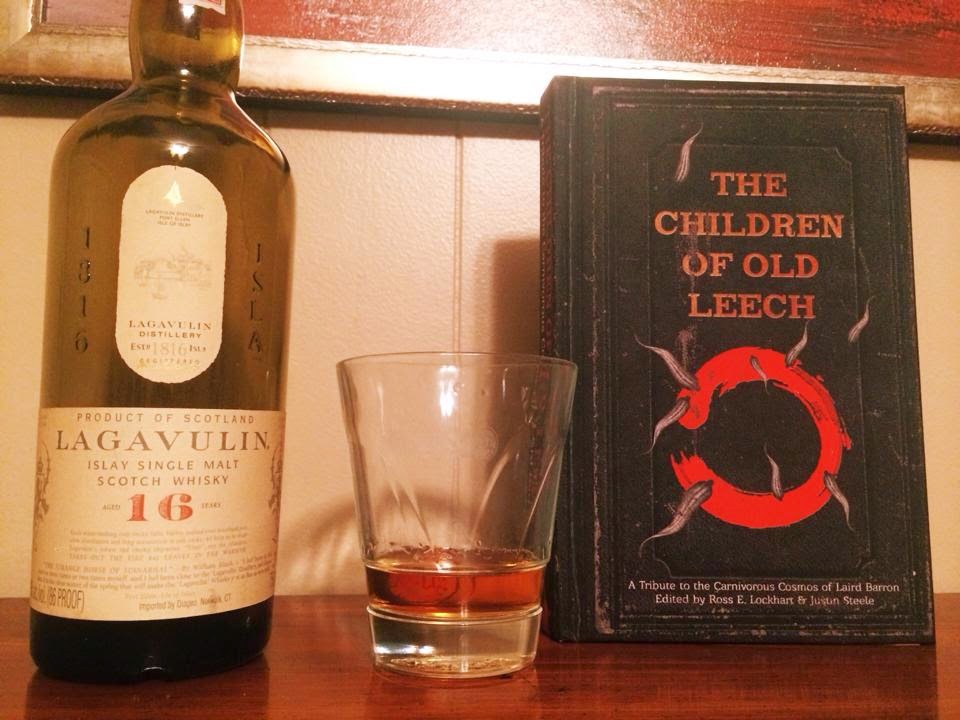
I’m supposed to be writing an introduction. That’s what Ross wanted me to do anyway, but I owe some responsibility to my fellow man, and what we did with this here book, what we unleashed, well, it’s just wrong. I’m sitting here at my desk, a near empty glass of Lagavulin on the desk edge, the bottle in easy reach. Three feet from me, propped in the corner of the room, is a 12-gauge pump-loaded with double-aught buckshot. If that’s not enough I have two .45s and a recently sharpened hunting knife within reach, so no matter how it goes down, it won’t go down easy. But who am I kidding. THEY want me to write this. It’s part of the project. Until my part’s done I’m safe. At least I think so.

I should probably start from the beginning. Tell you how I first discovered this Lovecraft guy, and how reading his fiction kicked me off onto this whole “weird fiction” thing, but I’m sure you’ve heard that one time and time again so I’ll skip ahead a little bit. A few Cthulhu Mythos anthologies into my tentacle binge, I picked up Ellen Datlow’s Lovecraft Unbound, and was pleased to see an anthology striving to avoid falling into pastiche territory. It was during my late night readings that I discovered my first Laird Barron tale. “Catch Hell” did something to me that only a few special stories managed to do: upon finishing I reflected on the story for a minute or two, and then turned back to the first page and immediately reread it. After the second read I walked over to my computer and ordered The Imago Sequence and pre-ordered Occultation. There was no question that I had stumbled upon something special, something dangerous. Who was this Laird Barron guy? He looked like a pirate, or a grizzled Viking warrior. His writing was a blend of genres that I loved. One part pulp, one part noir, two parts pure cosmic terror, blended smooth and seasoned with a literary skill that few possessed. I had found weird fiction for the connoisseur. If I had only known what I was getting into.

Flash forward a few years later, and I’m sitting here in my dimly lit office space, gulping scotch and wondering how I ever let myself get drawn into this mess. The light from my lamp is reflecting off my tin poster of The Good, the Bad, and the Ugly. I let Clint Eastwood’s stoic squint and Lee Van Cleef’s predatory glare serve as reminders that I have to be tough, finish this up. The wind is whipping at the window and I find myself eyeing the 12-gauge once every few seconds.

In September or so I had a conversation with Ross Lockhart, the other man responsible for what we’ve done here. We were both huge fans of Laird’s fiction, recognized its power. By the end of our talk, the wheels were in motion. We were so excited, completely oblivious as to what the actual significance of the anthology would be.

Finding the authors to take part actually proved to be the easy part. Laird’s work is highly respected, and offers authors much to work with. Ross and I wanted to find some of the best writers of weird fiction and offer them a chance to play in Laird’s playground. They could use the more literal elements of Laird’s growing “Pacific Northwest Mythos” or utilize his themes. Pastiche was not welcome. We wanted the authors to use their own unique talents and voices in order to do Laird justice, yet not by simple mimicry.

The thing is, Laird’s fiction is powerful, and not just in the literary sense. Some theorize that there exists some fiction that has the ability to bleed into reality. The words serve a higher function, act as a sort of formula. When these words are read they open a gate to somewhere else, allow them to come over. What Ross and I have done is complete the formula, see? Laird’s works were the base, the true source of the power. With these stories we amplified it, radio towers strengthening the signal.

Ross experienced it first. He’d be out walking his dog in sunny California, or out at his local bookstore when he would see him. Only it wasn’t actually him? Ross would catch a glimpse, just enough for him to realize he’d seen Laird. When he looked back he would see Laird standing there, at the mouth of an alley, or the end of a row of bookshelves. And it was definitely Laird, his mug isn’t the kind you mistake for someone else. Ross was perplexed, he told me later, because he was sure he was seeing Laird. He looked long enough for the imposter’s face to split into a black grin, and then with a wink the not-Laird would duck into the alley or step away from the aisle of books. Ross thought Laird must have been playing some kind of elaborate prank on him, until I pointed him to one of Laird’s blog posts. Apparently some of Laird’s friends have seen this doppelgänger before, but never more than once. I know this spooked Ross, and he hasn’t been the same since. I often ask him if it’s happened again, but whenever I bring it up he goes pale, changes the subject. If I push, he firmly denies anymore sightings, but I have my doubts.

I figured it out. Ross thinks we are just putting together a good group of stories, tries to justify his weird sightings with lack of sleep and too much reading for the project. But I know better, the dots are all there, easy to connect. Several of our authors have confided in me that during the writing process they were fraught with night terrors, and even a few cases of sleepwalking. One author turned in his story in a daze, and swore to me that he doesn’t have a single memory of writing it. One could chalk all this up to writer’s stress, working in overdrive to meet the deadline, but that doesn’t explain what happened with our foreword. A certain big-shot author sent us a foreword, before disappearing. Nobody has heard from him since. Ross and I debated on using the foreword regardless, only to find that it had somehow been erased from both of our computers. Strange coincidence considering we both reside on opposite sides of the country.

And then there’s me. Being woken up in the middle of the night by whispers from friends long departed. Easy enough to pass off as echoes from dreams, but that doesn’t explain why I would find the dog cowering under the bed whimpering. Or the black, sticky footprints left across my kitchen floor, cellar door ajar although I always check the latch before heading to bed.

If you’re still reading this you must now know that it’s too late for you, too. You’ve started to twist the handle, and the opening of the door is soon to follow. You’re going to meet the dwellers on the other side. The Children of Old Leech will soon be whispering in your ear, and they will whisper the same thing they whispered to me: “There are frightful things. We who crawl in the dark love you.”


The Children of Old Leech: A Tribute to the Carnivorous Cosmos of Laird Barron may be ordered directly from Word Horde or wherever better books are sold. Ask for The Children of Old Leech and other Word Horde titles at your favorite bookseller.

Friday, August 8, 2014

The Children of Old Leech Excerpt: “Tenebrionidae” by Scott Nicolay and Jesse James Douthit-Nicolay


Co-author Jesse James Douthit-Nicolay & Missy.


Today brings our final excerpt from The Children of Old Leech, and features a collaboration between father and son, a tale of riding the rails, and secret societies, and gangs, and girls and dogs and far, far stranger things: “Tenebrionidae,” by Scott Nicolay and Jesse James Douthit-Nicolay. Next week, we’ll be back with a little bit more, sharing the book’s introduction and afterword, as well as a gallery of photos. Until then, lie back, listen to the clacking wheels, and enjoy the ride. It is, after all, going to be a dark ride.


The whole room pulsed next and… altered, made no architectural sense. Missy barked and twitched her tail against the bucket and Dumont placed a hand on her back. He felt dizzy and fought the urge to puke. The doorway spun around him several times—round and round and round she goes, and where she stops—Ratch and Worm and Marlo stood. The two sidekicks drifted into place behind Marlo right away, assuming generic bully positions so fast Dumont was tempted to laugh. But Marlo had his K-Bar out beside his thigh and the other two each wore their general bulk as a weapon so no way was it time for wisecracks or laughter. The room no longer spun, only rocked a bit side to side in a seasick way as if whatever whirlwind torqued it had settled in overhead for now.

Lookit the schwag bitch, Marlo sneered at him, spoke the words as a slow smoldering threat. His voice oscillated in tempo as if the distance between them were stretching and receding. Dumont felt another twinge of nausea and struggled to suppress it. Ratch and Worm sneered in their special fleshy ways but said nothing. Missy pressed closer against his thigh, hindquarters stiff with tension as she barked in bursts. He stroked her head to calm her.

—Are you sad because your girl ain’t here? Well you can go ahead an’ cry now ’cause she ain’t comin’. Little Miss Tigger. Turns out she don’t bounce too well.

Dumont didn’t much care to hear what he was hearing but he knew Marlo was s’posed to be big on head games. Didn’t mean any of it counted for a damn thing. If it did then he failed her just like he failed Hector, the kid younger than him at the foster home, what they’d done to him.

He could stand—he was taller than all but Worm—only that would likely take things physical quick, and they were three on one. Maybe they only came to threaten him, scare him into leaving town. They could threaten away. He’d been ready to leave anyway, only with Tigger. But what had they done to Tigger?

She told him about the Shadow Riders almost at the start, how she hooked up with Marlo till someone tipped her off he only wanted her for some kind of sacrifice. How she found it out Dumont didn’t know but the whole story confused him anyway. Tigger was holding some big pieces back, he could tell that easy. Made it all hard to follow but main thing was he could see she was scared. Way shit scared. Now she was missing maybe worse and the Shadow Riders were all up in his face.

He never dealt with Marlo or his crew himself before, only saw them from a distance and Tigger would whisper that’s them or sometimes their names. There were others, Crunch and Skurd, Arkansas Jason and Jimmy Whip, more whose names he could not recall. But Marlo was supposed to be their king or ruler or some shit like that, Ratch and Worm his left hand and right.

Du-mont. That girl took something from me, Du-mont. Something she shouldn’a took. Did she give it to you, Du-mont? I think she did. Hey, we understand how these things can happen. It’s na-chur-al. Why don’t you just let us take a look in your pack Du-mont? We’ll take what’s ours and leave you with your mutt. No harm no foul, whadda you say?

Ratch stepped hands out toward Dumont’s pack. Although he seemed to move in slow motion Dumont didn’t try to block him, but he teetered sideways away from the Rider, his bucket seat tilting almost toppling.

Marlo started to say something like That’s it—and nod before he saw how Dumont slid himself several inches along the wall, bent to grab the bucket handle, then pushed up the wall all the way and with his sea legs at least half back beneath him swung the bottom of the bucket at Worm. Ratch was closest but Worm was the tallest so Dumont went for him first. The bucket with its half dozen rough crusted inches of lumpy concrete at the bottom took Worm full on the side of the head and he. Went. Down.

Missy lunged for Ratch and her teeth sank into his left calf above his boot so he cursed and stumbled back a step. Marlo jerked to his right, brought the K-Bar full up just as Dumont yanked back hard on the bucket only to feel the wire handle tear free from plastic. The battered orange cylinder tumbled away into the shadows and slammed loud against a wall somewhere off in the dark. Everyone looked surprised. Everyone except Worm, who lay staring at the dirt floor. Staring at it real close, like point blank close. Staring at his blood pouring on the dirt.

Dumont yelled to Missy and grabbed the guitar case, booked it for the exit. He felt a tug on his arm as if someone grabbed him and he yanked hard to get free. He heard Ratch pound after him several steps till Marlo shouted —Leave him, asshole! Get the pack! The pack!

Missy hit the doorless doorway ahead of him and staggered as she went. As he trucked through he felt himself swing up sideways on an incline a second, the whole room pitched over the major part of 90 degrees. His applicable senses all told him brace for the fall but he did not fall. Missy yelped ahead so he knew she felt the same still they both pressed on and came level again in three more steps. His stomach prepared to purge but he fought it down one last time, staggered forward anyway. Not now. Not here.

Marlo called from behind —Run sad punk. We’ll see you again. Run run run and we’ll all have some fun. Later on down the line.

Dumont ran. At least half a dozen blocks, Missy skittering always several feet ahead before Dumont felt the warm wetness on the fingers of his left hand and held it up to see first the blood dripping off them, then the red-streaked facing crescents of pink white muscle revealed in the deep slash across his forearm. He was leaving a trail but he didn’t stop to bandage himself till he reached the yard.


The Children of Old Leech: A Tribute to the Carnivorous Cosmos of Laird Barron may be ordered directly from Word Horde or wherever better books are sold. Ask for The Children of Old Leech and other Word Horde titles at your favorite bookseller.

Wednesday, August 6, 2014

The Children of Old Leech Excerpt: “Of a Thousand Cuts” by Cody Goodfellow


Photo courtey of Félix García


Our penultimate excerpt from The Children of Old Leech has arrived, and it’s a doozie. Cody Goodfellow takes us inside The Pageant, the secret, and bloody, gladiatorial matches held in occult locations throughout the world for the entertainment of a select few first glimpsed in Laird Barron’s The Light Is the Darkness, with the Samurai, and “Of a Thousand Cuts.” So prepare your mind by way of strange potions and stranger rituals, sit back, and hang on for a wild ride…


Only in the final, volatile moments of the ludus, when vows made by will are broken by flesh, does the Samurai forget himself and mar his hitherto flawless performance by trying to die.

Dragging his left leg, javelin jutting from butchered knee, hastily resected bowel waving like a gory pennant, yet the Samurai circles his remaining opponent with calculated poise, herding him downwind into the black, creamy smoke wafting from the pyre of his identical twin.

Frenzy and fatigue vie to take the Roman even before the Samurai can close with him. Plunging his broken katana into the smoldering corpse to goad his enemy, the Samurai presents his wakizashi like a gift and settles into a waiting pose.

The Roman has abandoned all technique. Draws a whickering, whooping breath into the broken basket of his ribs, roars hollow blood-flecked hate and charges through charnel smoke, gladius swinging in a blind woodsman’s coup de grace.

And then the moment that puts the lie to perfection, proclaims it the act not of a masterful athlete, but of a slumming, drunken god, or a troubled automaton. Samurai bows his head, arms out in supplication. Throws up an arm, not in defense, but to tear off his helmet. Impossible, of course…

The Roman’s chopping stroke shears an antler from the Samurai’s helmet and glances off his leather cuirass. Overextended, he tramples his opponent and lands among his brother’s blazing remains. Before any outside his inner cadre have noticed his deathwish, the Samurai recovers and hamstrings the Roman. Wakizashi eagerly swims up hyperextended calf muscle, flensing meat catbox-bitter with lactic acid from spiral-fractured bones.

The Roman turns, seemingly revived by blood loss. Brings the gladius down on the Samurai’s shoulder, splitting the torso down to the solar plexus. What little blood comes out at all is almost black.

The wakizashi quivers, sheathed to the hilt in the Roman’s kidney. Samurai’s hand touches but can’t grasp it. The Roman’s spade-shaped sword twisting in the burst balloon of his lung. With his other hand, Samurai draws the javelin from his knee. Nearly faints, but somehow he drives the long spike up through the corded muscles of the Roman’s neck, penetrates the ribbed vault of the hard palate and into the cavernous echo chamber of the gladiator’s brain.

It takes nearly another minute for the Roman’s body to get the message.

It takes the surgical team another seven minutes to separate the bodies and check vital signs to certify the winner. The Roman called Pollux, though stabbed in nine places and burned to the third or fourth degree over ninety percent of his body, almost survives the night.

Shot up with painkillers and adrenochrome, the Samurai lurches out of the arena using the Roman’s enormous gladius as a crutch, to the muted cheers of the small, select audience.

***

In the time after a battle is when it gets worst. He can almost remember who he is.

He knows he had a name.

Before this.

His name.

It was… something.

But in the Pageant…

Now… again and forever… he is the Samurai.

Rumors swirl about the champion few choose to fight, relegated to sideshow matches in pariah state circuses. All but destroyed in six of fifteen matches in nine years, but undefeated, and none have ever seen his face. Even in the pitch-black demimonde of the Pageant, the Samurai is a cipher, his identity insignificant next to the paradox of his survival. Students of the art point to the many awful injuries sustained; not even the Pageant’s surgeons could rebuild such terrible carnage. Indeed, from one match to the next, the Samurai gains or sheds weight and height. Lord Sun makes no promises regarding the identity of the Samurai. Only the masked helmet and the mated swords and the implacable, elegant butchery remain the same.

And yet, the obligatory devil’s advocates must insist, compare the perfect discipline, the rigor of technique maintained even unto dismemberment, the reflexive disdain for mere mortal injury, the true absence of fear of death or pain. No matter how many bodies he’s gone through, it could only be the same man.


The Children of Old Leech: A Tribute to the Carnivorous Cosmos of Laird Barron may be ordered directly from Word Horde or wherever better books are sold. Ask for The Children of Old Leech and other Word Horde titles at your favorite bookseller.

Monday, August 4, 2014

The Children of Old Leech Excerpt: “Ymir” by John Langan


In Norse mythology, Ymir was a being born from primordial frost and poison, who became ancestor to all jötnar, or giants. In the realm of weird fiction, John Langan is also a titan with a penchant for birthing ettins from his armpits and monsters from his feet. What follows is an excerpt from Langan’s story “Ymir,” from The Children of Old Leech.


III


The Eckhard Diamond Mine was a collection of Quonset huts set back from the rim of a titanic hole in the endless white. Barry leaned forward for a better view of it, whistling appreciatively. “Isn’t that something? How far across would you say that is?”

“A quarter-mile,” Marissa said.

“I expect you’re right.”

She stopped the Hummer at the front door of the metal shed closest to the pit. The light green paint that had coated the structure was visible only in scattered flakes and scabs. She left the motor running: the digital thermometer on the dash measured the outside temperature at forty below, and she didn’t want to risk the engine not starting. For the same reason, she was carrying the heavily oiled .38 revolver in a shoulder holster under her coat. She zipped and buttoned the coat, pulled on the ski mask and shooting mittens lying on the passenger’s seat, and tugged her hood up. She half-turned to the back seat. “You ready, Barry?”

He had encased his bulk in a coat made of a glossy black material that made her think of seal skin. The gloves on his large hands were of the same substance. He drew a ski mask in the gray and electric green of the Seattle Seahawks down over his broad, bland face. “Ready,” he said. “Let’s go look at my new investment.”

Marissa had expected their arrival to draw some kind of reception from whoever was inside the hut. The moment she stepped outside, however, into cold that shocked the air from her lungs, that she felt crystallizing the surfaces of her eyes, she understood why those inside and warm might prefer to reserve their greetings for her and Barry joining them. The cold seemed to take her out of herself; it was all she could do to keep track of Barry as he lumbered the fifteen feet to the hut’s entrance. Without bothering to knock, he wrenched the door open and squeezed through the frame. Marissa followed, giving the area surrounding this end of the building a quick once-over. She wasn’t expecting to see anything besides the Hummer with its schoolbus yellow paint, a steady cloud of exhaust tumbling from its tailpipe, the great hole in the earth in the background. Nor did she.


The Children of Old Leech: A Tribute to the Carnivorous Cosmos of Laird Barron may be ordered directly from Word Horde or wherever better books are sold. Ask for The Children of Old Leech and other Word Horde titles at your favorite bookseller.

Wednesday, July 30, 2014

The Children of Old Leech Excerpt: “The Woman in the Wood” by Daniel Mills


Today’s The Children of Old Leech excerpt comes from Daniel Mills’s epistolary story about a young man who has traveled north, after troubles at home, “The Woman in the Wood.”


From the diary of James Addison Thorndike II (1828-1843?)

15th July. Friday.

I found it in the fields near the pine-wood.

The beast was lying on its side & I thought perhaps it was sick. But I smelled the rot as I drew near & saw its blood splashed through the grass—

This morning it rained, though the skies were clear by noon. The day was hot so I wore my linen shirt & trousers. I ate sparingly of the dinner my Aunt had prepared (mutton roasted & charred) and afterward announced my intention to walk outside on my own as Father would never have permitted in Boston.

I walked the fields for the best part of an hour without seeing man or beast. Then I came over a rise & saw the great herd of them before me. They were grazing at the end of the stony pasture: dumb & grunting & caked in their own filth.

I went eastwards & climbed over a wall to the adjoining field where the land slopes down to the neighbors’ property & the pine-wood, which lies in a depression between so that none know for certain who owns it (or so my Uncle says).

The grass is higher there & that is where I found the ewe.

Uncle Timothy was at work in the pastures to the south. I ran toward him, waving & shouting & he came to meet me at a sprint. I told him what I had found & he sent me back to the house. Then he called to Auguste, one of the hired men.

Come, he said. And bring your gun.

I went back to the house & told Aunt Sarah that I had found a dead sheep. She said it was probably dogs or a wolf, but Uncle Timothy returned to the house at dusk & said it was likely a wildcat, though he hadn’t heard of them coming so far south, especially in the summer.

Supper was strained & silent. Aunt Sarah was quiet where she sat opposite me & I could not meet her eye without thinking of the pasture & what I had found there.

I had no appetite. I asked my Uncle if I might be excused & he nodded.

So I came upstairs, thinking I might read Wieland, which had been Father’s gift to me before leaving. But I could not touch my books & I passed the evening by the window, watching the clouds as they covered the moon & the stars.

***

without thinking of the beast where it lay in the grass with its mouth forced open, the jaws broken & the organs wrenched from out the shattered mouth: its heart & lungs & the ropes of its intestines, spread out on a slick of blood & the stench of shit coming from the mass of them where the sun’s shone down through the day


The Children of Old Leech: A Tribute to the Carnivorous Cosmos of Laird Barron may be ordered directly from Word Horde or wherever better books are sold. Ask for The Children of Old Leech and other Word Horde titles at your favorite bookseller.

Monday, July 28, 2014

The Children of Old Leech Excerpt: “The Last Crossroads on a Calendar of Yesterdays” by Joseph S. Pulver, Sr.


Today’s excerpt from The Children of Old Leech comes from a story about monsters–human and otherwise–and books of magic, and blood and ashes: Joseph S. Pulver’s “The Last Crossroads on a Calendar of Yesterdays.”


To and fro. Rocking. Slow.

Slow.

Measured, not sluggish. Predator readying true for ignorant prey.

To…

and back again. His grip not far from the shotgun.

The old man sipped his sweetened coffee from an old porcelain mug. From his hillside porch he stared into the night-darkened forest toward what was no longer the Hambly property. Old discomforts and slowmotion anger was a butchering quicksand that was bringing on tears. Kellerman put the filtered-tip cigarette to his lips and inhaled. Took the smoke deep. Held it. Exhaled. “Ruined, Zina… Bastards have ruined it.”

“—against the horde of insidious parasites.”

“You are the White… American… Dream. You are the defenders of White European culture and heritage. Your commitment and actions preserve what Our American Fathers—Benjamin Franklin, George Washington, and John Adams—shed blood to establish and protect… our Great White Nation. You are America’s true patriots.”

Pride-roasted cheers and a vigorous round of applause billow through the compound carved-out of the darksome forest of rugged pine.

“WAR DAY.” The voice of the Allfather or a blood-and-fire Jehovah at 110 decibels thunders from the loudspeakers and echoes in the hills. “Is a HOLY DAY!”

Another explosive burst of applause followed by a chain reaction of Nazi salutes expressing their pathological eagerness. Amens dash like snarls. Three semiautomatic handguns bark and send their payloads skyward. Two sisters, paleskinned twins married to paleskinned brothers, rise from their seats and begin singing a bastardization of “Onward, Christian Soldiers.” Their enflamed voices are joined by ten and ten and ten and ten. Fifty-strong becomes nearly one hundred.

Once Metzger disciple, before the riff became a chasm, Walter Warren smiles on the crowd. “In a week this compound, the new home of the White Liberation Alliance, will be completed. God is pleased with your work, brothers and sisters. God is pleased.”

Not enough miles away, or countries for that matter, Kellerman caught the amplified words. He’d heard the raised voices sing and the gunfire. Heard them last Saturday night, and too many times in the last months.

“Nazis.”

Zina sat up. Growled.

The old man shivered.

Zina stood, faced the black woods, offered the thunder her teeth and an unsheathed promise steeled with Till-Death-Do-Us-Part loyal.

Twenty years since he’d briefly lived in Olympia, in the distance below. Twenty years since he’d come west to these hills and hollows, hoping to find balm. There were small moments when he could pretend (if the sky was soft summer blue and the sun warm and the blooms gave off sweet scents) the beauty it held helped. Kellerman was an old man now, felt it when the cold ruled muscle and mind mercilessly, saw it sear the tired face the mirror slapped him with. The nightmares and wounds (still a bullet to heart and mind no prayer could moderate) of the small boy he’d been, the boy the Americans liberated from Buchenwald, now fully reawakened by the hate that had invaded his property, were, these last few months, as loud and haunting as the last breath of his cancer-ridden wife.

Kellerman’s right hand stroked Zina between her ears. “Yes, girl, I know.”

He stood and stubbed out his cigarette on the porch boards, picked up his mug, his shotgun, and turned to go inside. “Little good it will do, but we will try the Authorities again tomorrow, girl.”

Zina, ninety pounds of unwavering attentiveness, settled at the foot of his bed. His Mossberg rested against the nightstand. Kellerman’s hands were trembling fists as he fell asleep.


The Children of Old Leech: A Tribute to the Carnivorous Cosmos of Laird Barron may be ordered directly from Word Horde or wherever better books are sold. Ask for The Children of Old Leech and other Word Horde titles at your favorite bookseller.

Friday, July 4, 2014

The Children of Old Leech Excerpt: “Pale Apostle,” by J. T. Glover and Jesse Bullington


 Photo Courtesy of Nick Gucker.

Today’s excerpt from The Children of Old Leech comes from J. T. Glover and Jesse Bullington's collaborative tale, “Pale Apostle,” which I’m sure you’ll agree sets up the fireworks with a dangerously short fuse…


The bell at the front of the shop tinkled, and Wah clicked her teeth—she hadn’t heard his key in the lock, which meant he’d left the door open again. It was bad enough he insisted on making deliveries to all the family associations himself, but his forgetting to lock up was simply unsafe. Ducking through the curtain, her slippers whisking against the boards, she saw his familiar silhouette across the dark shop. He’d turned and was locking the door.

“It doesn’t do much good, now,” she said, trying to keep the chiding tone from her voice. “When I’m in the back, though, try to remember to—oh!”

The white man smiling at her across the shadowed bins and shelves was not her father.

“I sorry, honorable sir, but we closed right now,” she said, speaking with deliberate fresh-off-the-boat awkwardness even as her mind raced.

Her father was probably talking over old times at some association by now, and might not return for hours. It wasn’t late enough yet for the police to be rattling doorknobs, and they rarely took much notice of crime in the Chinatown anyway. Who would hear if she screamed? Mr. Dong next door, perhaps, but perhaps not…

Top shelf, middle aisle. As she stepped around the counter, she studiously kept her eyes on the intruder, instead of the modest display of cutlery. If she could just—

“How excellent,” the stranger said, speaking in perfectly unaccented Szechuanese as he glided toward her, past the knives. “That means we shall not be disturbed.”

The smile he gave her stretched his strangely ageless face into a rictus—like most white men, his exotic features somehow coalesced into a bland, nondescript whole. His black coat and broad-brimmed hat were wet with the night’s rain, leaving puddles on the floor, but his skin looked parched as scrolls from a temple. He reached inside his coat, and Wah flinched, wondering if it would be a weapon, or worse, handcuffs—given the choice between a stickup man or a plainclothes Seattle policeman, she would take the lesser villain. Instead, he held out an envelope to her, as dry as the withered hand that held it.

“My name is Clarence Kernochan, and I have a business proposition to discuss with you.”

“My father—” Wah began, but he cut her off in the rude fashion of Americans, waggling the envelope.

“I trust you will surely find this to the advantage of both yourself and your father, Miss Sung.”

Wah looked back at his face, and in the instant before she saw him straight-on, she could have sworn that his black pupils seemed to undulate, as if something wriggled behind them.


The Children of Old Leech: A Tribute to the Carnivorous Cosmos of Laird Barron may be ordered directly from Word Horde or wherever better books are sold. Ask for The Children of Old Leech and other Word Horde titles at your favorite bookseller.


Links: Hardcover (Barnes and Noble, Amazon), Nook, Kindle.

Wednesday, March 5, 2014

The Children of Old Leech are coming...


There are Things–terrifying Things–whispered of in darkened forests beyond the safe comfort of firelight: The Black Guide, the Broken Ouroboros, the Pageant, Belphegor, Old Leech…


These Things have always been here. They predate you. They will outlast you.


This book pays tribute to those Things.


For We are the Children of Old Leech… and we love you.


The Children of Old Leech
A Tribute to the Carnivorous Cosmos of Laird Barron


Edited by Ross E. Lockhart & Justin Steele
Cover design by Matthew Revert


Coming summer 2014 from Word Horde


TOC to be unveiled soon


Reviewer inquiries to publicity[at]wordhorde[dot]com


PS: Happy Birthday, Laird!


Tuesday, September 10, 2013

Interview: Ross E. Lockhart


Ross E. Lockhart made quite a name for himself as an editor for a small press before breaking off and starting his own small press, Word Horde. Tales of the Jack The Ripper is the first anthology Ross has published with his press, and it's been garnering several positive reviews, my own included. Ross stops by The Arkham Digest to chat about the Ripper anthology and what can be expected from his new press.


First things first, I'd like to thank you for taking the time for this interview.

Thanks for having me, Justin.


How did Word Horde come to be, and how did you settle on such a catchy name for your press?

I'm so glad you like the name. The name Word Horde was the result of my daydreaming while listening to a recording of Beowulf. There's this great line in which Beowulf unlocks his "word-hoard"--the treasure-chest of his vocabulary and storytelling skill--to impress a group of warriors. Somehow, that kenning got twisted around in my head and I found myself contending with a gang of words. That metaphor--words as warriors--really resonated with me, so I tucked it away in my own word-hoard waiting for the right opportunity to use it.

Earlier this year, I started Word Horde out of necessity. As you know, until December of last year I worked as managing editor for--what did the New York Times call them?--a "tiny specialty press" out of San Francisco. Without going into too much detail, that was a company with a lot of problems, and while I was able to fix a great many problems while there, there were fundamental problems that were, frankly, unsolvable. Once we parted ways, I knew I wanted to start my own publishing company so that I could continue doing the work I love, editing great novels and stories and anthologies, but I also realized that I wanted to structure my company in a way that treated authors, editors, artists, and designers fairly and with respect. I wanted the creatives I worked with to feel like they were part of something bigger. Part of the Word Horde.


Why did you choose Tales of Jack The Ripper to be your first project? What do you find alluring about the Ripper and his murders?

As boogymen go, Jack is a rock star. Everybody knows about Jack, but nobody knows who he really was. Everybody has a mental image of this heinous killer--mine includes a touch of Lon Chaney in London after Midnight--and yet, a century and a quarter after five women were brutally murdered, the case remains unsolved. Moreover, Jack has inspired so many authors to expand upon the mystery that the lines between fact and fiction aren't just blurry, they're practically invisible. John Francis Brewer's The Curse Upon Mitre Square may have been the first bit of fiction to explore and exploit the murders, but it definitely wasn't the last. Authors from Marie Belloc Lowndes to Robert Bloch to Harlan Ellison to Maureen Johnson to Alan Moore have taken their own stabs at this subject. With Tales of Jack the Ripper, I wanted to give some of my favorite storytellers a chance to peel back the layers of this mystery and expand on Jack's literary legacy.


Is Word Horde going to focus mostly on short fiction, or do you plan to include novels in your lineup as well?

I'm concentrating on anthologies and short works in the short term, but I would like to include novels--the right novels--in the Word Horde lineup some day. Fiction works best for me in bite-sized pieces. I feel that Poe, in "The Philosophy of Composition," nailed it: "If any literary work is too long to be read at one sitting, we must be content to dispense with the immensely important effect derivable from unity of impression -- for, if two sittings be required, the affairs of the world interfere, and every thing like totality is at once destroyed."


Are you open to any sorts of submissions or pitches at this time? If so, what kind of work would you like to see?

Absolutely. I am doing prep work and beginning to send out invitations for a third Cthulhu Mythos volume, though I'd like to partner with a larger publisher for that project. Word Horde projects I am now reading for include a Giallo anthology (stories inspired by the Italian crime genre and the films of directors like Argento, Bava, and Fulci), and I have plans for anthologies paying tribute to some of my favorite filmic and literary genres (weird war stories, swashbucklers, etc.). I prefer to work with authors on an invitation basis, rather than issuing an open call, but I'm always interested in hearing pitches from authors interested in wrangling an invitation to the party. The more the merrier!


What can readers expect from Word Horde in the future? Are there any projects you can talk about at this time?

Readers should expect great things from Word Horde. I'm not quite ready to reveal all our cards, but I would encourage readers to bookmark http://www.wordhorde.com or sign up for our mailing list or like us on Facebook. That way, you'll not just find out about new books and projects as they happen, you'll also get plenty of behind-the-scenes information.


Once again, I thank you for your time!


Thank you! I had a great time.